
See the big picture when conceiving planting schemes, advises Peter Burks.
As someone who loves plants and would happily have one of everything in my garden, I am often disappointed with the varieties seen in many gardens and public spaces when the range of plants that could be used is so great.
I’m no expert on what planners might stipulate as that could significantly affect people’s choices but I will attempt here to suggest good, tough plants that also provide a really rewarding experience.
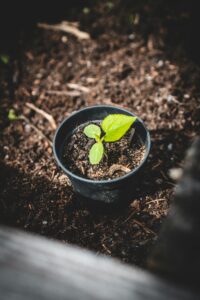
We all know autumn is the best time for planting all perennial, hardy plants as the warm, moist soil at this time of year promises good root growth, enabling the plant to grow very actively the following spring.
But fortunately, container-grown plants can be put in the ground all year round. Don’t try planting in waterlogged soils or into frozen ground though, and always incorporate mycorrhizal fungi such as Rootgrow or a new version Solivita, into your planting hole.
It is especially important if planting in imported topsoil or in areas where ornamental plants have not been grown before. The mycorrhizal fungi you add must touch the roots of the plants for it to ‘germinate’ and begin its role of assisting the plant to establish and aid the sourcing of nutrients and water.
One of my favourite plants at this time of year is the shrubby, winter-flowering Honeysuckle Lonicera fragrantissima. As the name suggests, this produces wonderfully fragrant flowers but does this throughout the winter.
On mild days the fragrance can be detected many metres away from the plant, so you can enjoy it as you walk past. It grows happily in any soil or situation including shady locations and can grow quite large, reaching 2 to 2.5 m but a trim in the spring, after flowering has finished, keeps it under control.
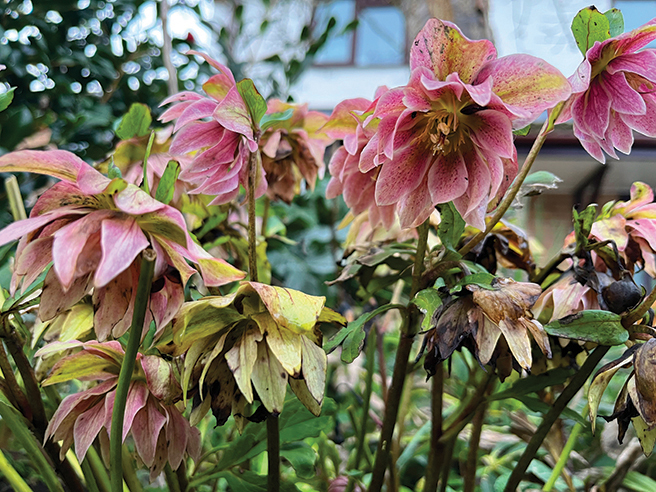
A second plant just coming into its best season are Hellebores. These have exotic flowers in many colours throughout late winter and early spring and many have attractive leaves as well. They thrive in moist, shady locations so would be planted in the shade of larger shrubs and trees. They will be almost unnoticed as our summer interest plants go about giving us a show but come the late winter they burst into life with long-lasting displays of colour.
Viburnums are a genus of hardy shrubs that are successful in all soils and locations. While the evergreen, winter-flowering Viburnum tinus is often planted, there are several other varieties that are very good.
Viburnums are a genus of hardy shrubs that are successful in all soils and locations. While the evergreen, winter flowering Viburnum tinus is often planted, there are several other varieties that are very good.
Viburnum bodnantense Dawn is a fragrant, pink, winter flowering deciduous variety growing to about 2m tall with a fairly upright habit. Again, a spring pruning will control the size and shape. Then there are some fantastically scented, rounded shrub such as ‘V. burkwoodii’, ‘V. juddii’ and ‘V. carlesii’ aurora – all flowering from spring into early summer and making lovely rounded shrubs, laden with pale pink flowers that usually open as a darker pink.
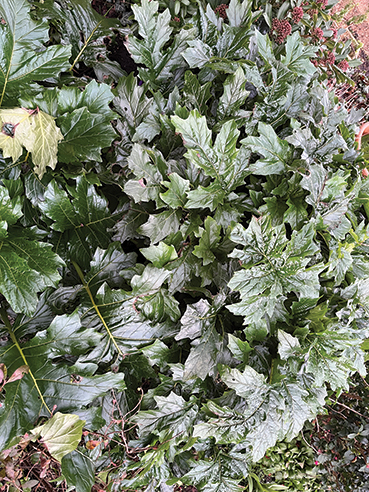
A tough but exotic herbaceous perennial with handsome, shiny, deep green leaves all year around is Acanthus or Bears Breeches. They will grow in sun or shade but will flower better in a sunny spot and have alluring mauve pink, foxglove-like flowers in late summer and autumn. Fine at the front of a border and will colonise a good space.
I will have to include in this list Camellias. Often thought of as not too hardy as they do so well in Cornwall, they re in fact very much so, rivalling Laurel. The other consideration is they do prefer acidic soil although they are not as fussy as rhododendrons on this point.
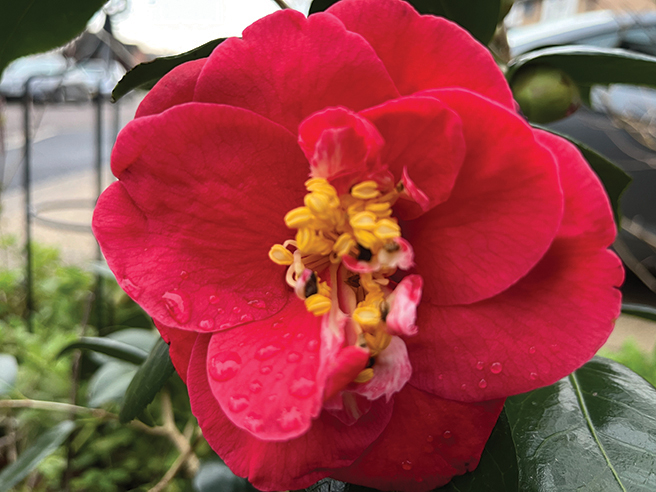
With their wonderful shiny, evergreen leaves and truly dramatic size, quantity and form of the flowers makes them a must for any planting scheme. They will also thrive in any location including north-facing but don’t like to be too dry. The Camellia sasanqua varieties are also an excellent choice as they are scented and winter flowering.
A genus of plants that I find hard to understand why they aren’t more widely planted are Calycanthus, also known as Allspice. These are decidious shrubs that will grow from 1.5 to 2.5 m tall with a similar spread and thrive in all soils and situations.
They produce large, very showy, exotic-looking flowers in a spectrum of colours from white, pink to red and even brown continuously from mid-summer into autumn. A must for every location.
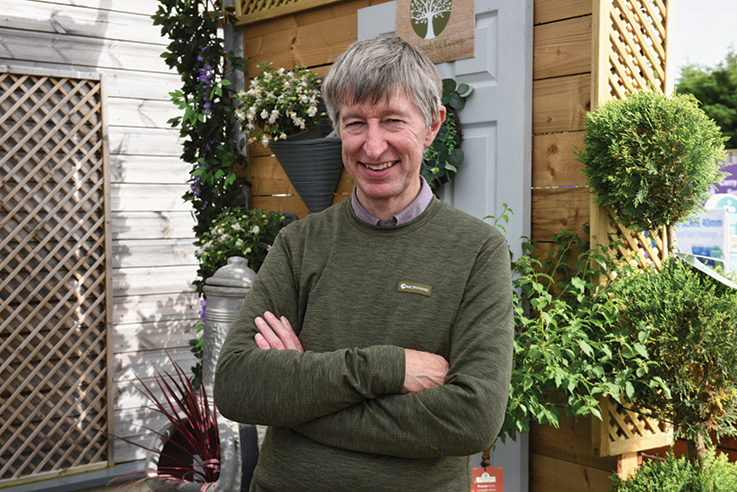
Peter Burks, CEO of the Garden Centre Association, is a fully trained horticulturist and has worked in directorial and senior management positions for garden centre nationwide for more than 40 years. He ran garden centres with his parents until they retired. Three other family members also work in the sector. Peter helped set up then run the multi award-winning Sanders Garden Centre in Somerset for more than 10 years, being named GCA Garden Centre of the Year twice in this time. He was southwest regional manager for Wyevale Garden Centres, before becoming general manager for Thornhayes in Cornwall, and managing Ferny Garden Centre in Devon, part of the Blue Diamond group of garden centres.