
Gillian Taylor is a horticultural speaker, writer, gardener and belongs to the Professional Gardeners Guild and Chartered Institute of Horticulture.
In 2026 the RHS Chelsea Flower Show has allocated the prestigious Monument site to Architectural Plants (AP), a nursery based in West Sussex well known for its statement evergreen plants.
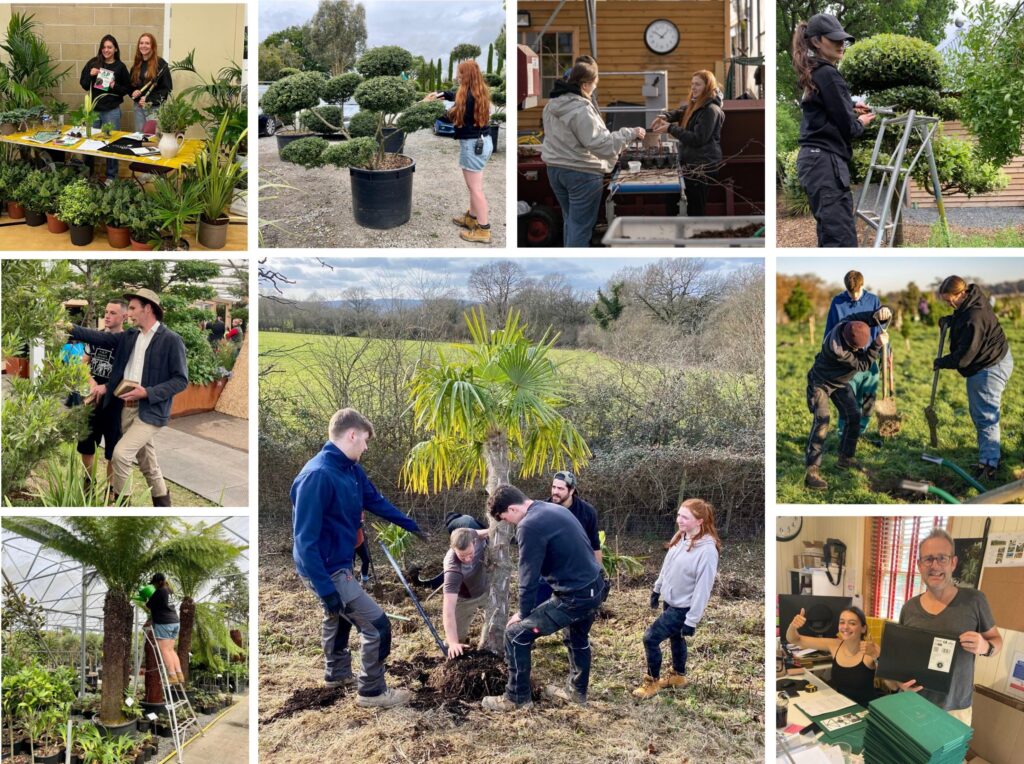
The show garden is designed to celebrate the 36 year heritage of AP but also to look forward to the next generation of horticulturists who will take topiary into the future. AP has a strong commitment to education, working with local colleges they provide a two year programme of practical experience thus empowering the students and adding to the success of the business. Key plants will be showcased and clipping demonstrations, twice daily, designed to show the public the joy of topiary will push the boundaries of many peoples view of this art form.
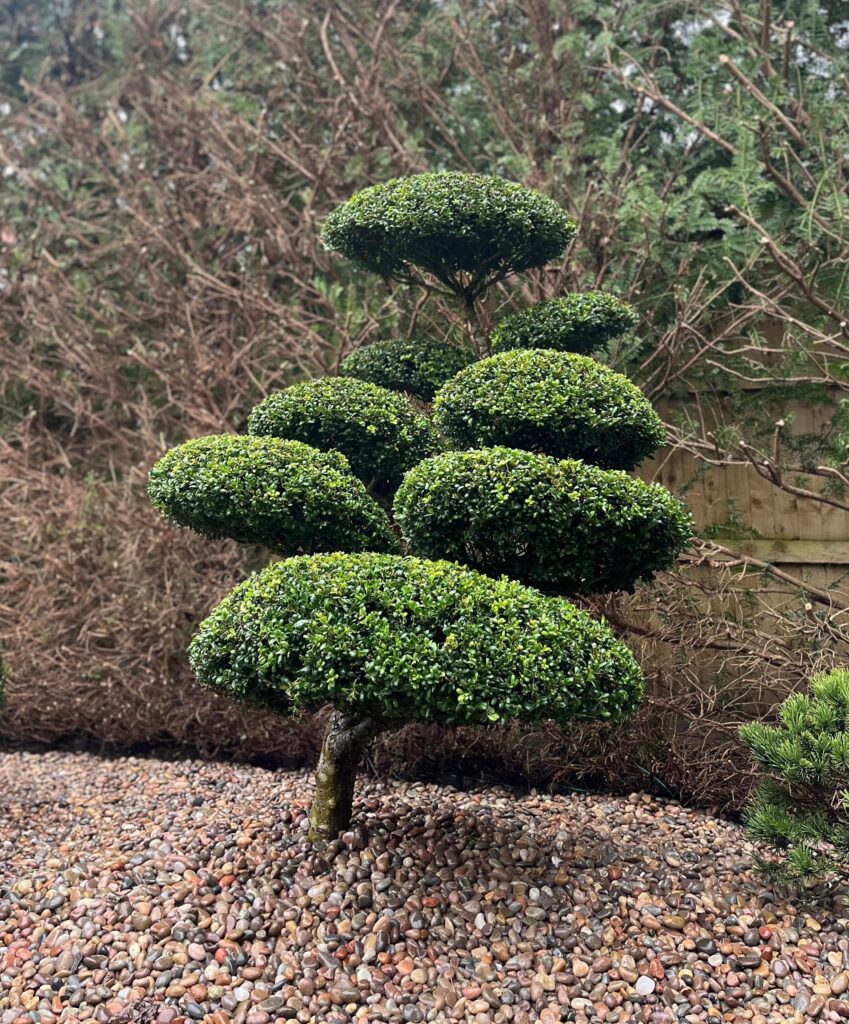
Familiar forms of topiary seen in the past include cones, pyramids and balls often in the standard Yew or Box species. AP has raised the bar and for over twenty years has been in the forefront of modern topiary design. Their ‘ Niwaki’ sculpted trees are a living work of art, the word Niwaki meaning ‘garden tree’. These are designed to go into the ground and in combination can provide drama and beauty through the year.
Skilled members of the team on site create strong shapes from plants including:
Myrtus apiculata , ‘Red Stemmed Myrtle’ – this outstanding evergreen tree has deep orange bark on mature stems while new growth is bright red. Areas of mottling and flaking bark make it extremely tactile. The delicate white fragrant flowers appear in August, and the pointed leaves lend themselves to clipping into cloud shapes and crips pads. An exquisite choice for a discerning client and ideal for a sheltered courtyard or urban garden.
Ilex crenata ‘convexa ‘, ‘Box – leaved Japanese Holly – hardy and tolerant of most soils as long as it is not waterlogged, this is an excellent look alike box alternative perfect for topiary.
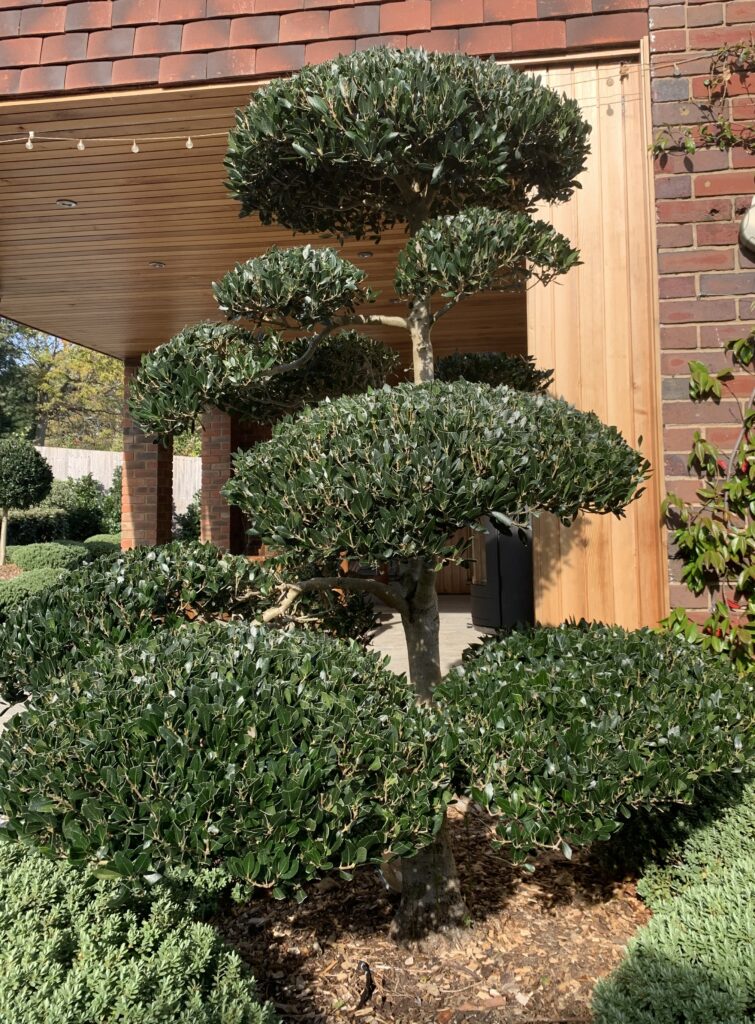
Phillyrea latifolia – ‘Green Olive’ a hardy small tree suitable for cold and exposed sites. Its dark foliage and dense growth habit with decoratively barked trunks makes this a popular choice.
Architectural Planting
Landscapers and garden designers are looking for innovation and reliability, these plants offer both. Using the cloud pruned trees in conjunction with tightly clipped balls , or as AP prefer to use’ Blobs’ , provides contrast, interest and an element of fun in gardens. Maintenance is manageable and the Niwaki trees give a garden a sense of exclusivity. These forms are popular in courtyard designs as they allow a view through the stems from the house, giving an immersive feel to the garden.
Andrew Duff, Chair of the SGLD, recently commented that designers should consider repurposing plants in gardens rather than removing everything and starting with a blank canvas. This drive for increased sustainability ties in strongly with the ethos of Architectural Plants. For many years they have been championing their ‘ Creative Maintenance’ ideas.
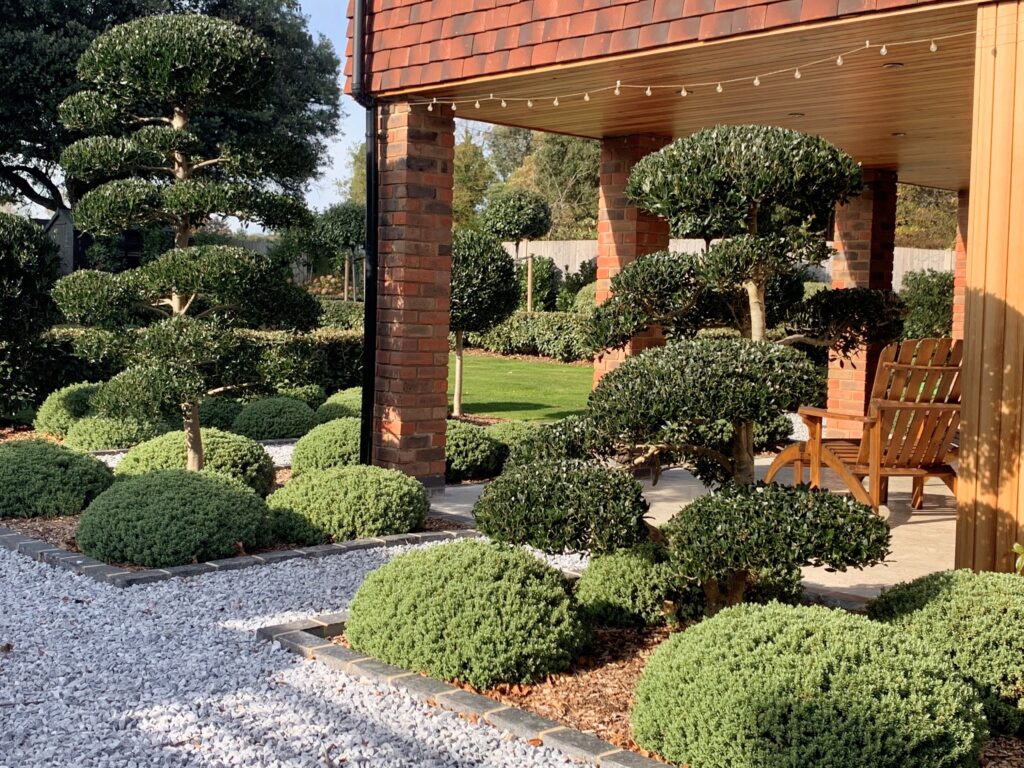
This concept is to take a plant that may currently be large and unattractive and by careful thinning and shaping turn it into a thing of beauty! Crown raising and thinning shrubs can produce multistemmed sculptural plants that add to the design rather than detracting. The light that is allowed through these previously dense shrubs allows layered planting below to extend the season of interest.
To quote AP:
‘Some plants are born Architectural; others have it thrust upon them. Be bold, be brave’
In keeping with the nursery’s green credentials many of the specimens on display at RHS Chelsea Flower Show will be home grown stock, including the Red Stemmed Myrtle exhibits. The use of topiary in its modern form should be embraced, and this showcase will be of great interest to the visiting public I am certain.
Photographs courtesy of Architectural Plants.
For more information visit: