

An uptick in blood-sucking pests could follow last year’s long hot summer, writes John Horsley, training and professional development officer at national trade body the British Pest Control Association (BPCA).

Ticks, which are implicated in the spread of Lyme disease, thrive in warmer temperatures but need a degree of moisture in the air too.
In recent years, reports of ticks and their associated diseases appear to be on the rise, although possible reasons for the increase range from changes in land management and proved surveillance to host distribution and climate change.
Habits and Habitat
Usually found in long grass, woodland, moorland, parks and gardens, ticks thrive across the UK where there is shade, deep vegetation and a strong wildlife population.
A parasitic arachnid that feeds from a variety of animal hosts, around 20 different species of tick live in the UK.
Many are specialist wildlife parasites and will only feed on a limited range of animal hosts, including mammals, birds, reptiles and occasionally amphibians. However they can occasionally end up on pets and people.
Most native ticks don’t carry infection but some do and can pass on diseases including anaplasmosis, tick-borne encephalitis virus. babesiosis and Lyme disease.
Ticks are a major disease vector as they can pick up pathogens while feeding on an infected animal host and transmit them to hosts they may then feed on.
Many species remain infected throughout their lifespan and some infected female ticks can also transmit infections to their offspring via their eggs.
Their lifecycle typically involves four stages, from egg to larva, nymph and adult. They feed only once at each stage, dropping to the ground to moult into the next stage.
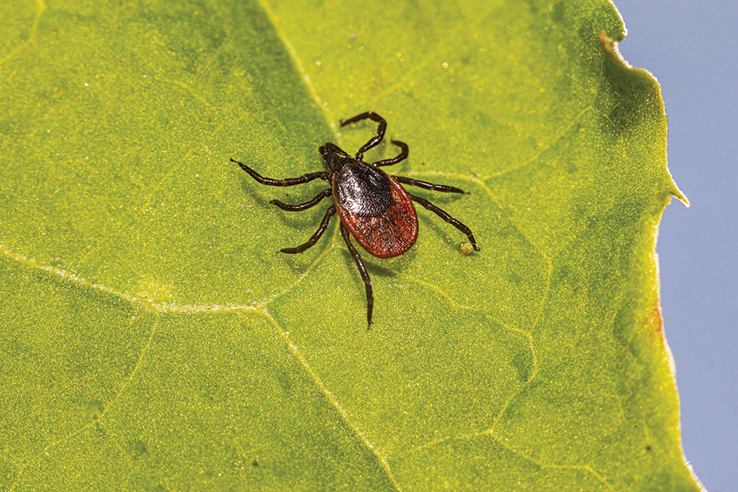
The most commonly encountered native tick specie: is the sheep or deer tick, which is common in areas of grassland and often abundant in transition zone: between vegetation types, such as when woodland meets meadow.
While ticks are most active from March to October, with peaks in June and August, they are largely dormant through the winter, although they can be active on a mild winter day.
How ticks find a host
Ticks will leave the moist leaf litter at ground level, climbing up vegetation to a height where they can latch on to passing people, pets, domestic animals and wildlife using their hooked front legs.
These have sensory organs that respond to changes in carbon dioxide, heat, odour and physical disturbances – letting them know a potential host is near.
They will wait for a host either until they successfully attach, or have lost too much water, forcing them to retreat to ground level to recover.
Once they have latched on to a host, they will search for a suitable site of exposed skin before they bite and start to feed.
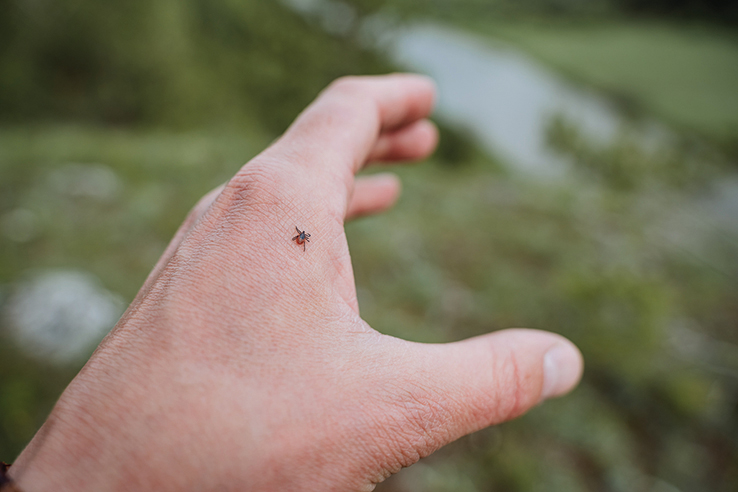
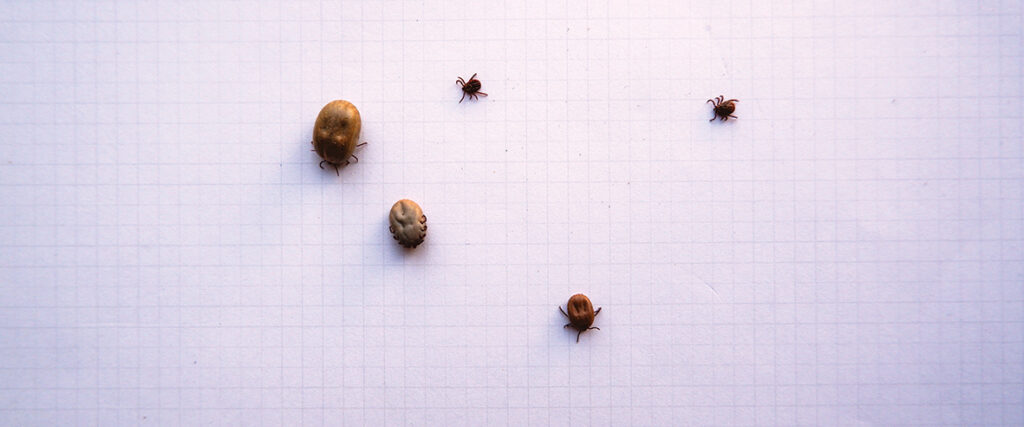
As they fill with blood, larvae, nymphs and adult males will become bigger but adult females can well to many times their original size, their blood sacs lightening in colour until they reach the size of a small pea. If undisturbed, ticks may feed for up to seven days before letting go.
Tick bites and how to prevent them
While they are usually very small and may go unnoticed when they first bite, ticks become visible to the eye once their blood sacs start to fill.
Removal requires care – if you do it incorrectly, their mouthparts may remain stuck in the skin and can cause infection.
The bite is usually painless but risk of bacterial infections rises the longer the tick is attached. Viruses though, can be passed immediately. Seek medical advice if any symptoms of illness develop in the couple of weeks following a tick bite.
Safe practice
For landscapers and gardeners, PPE is advisable when working in areas of long grass or thick vegetation to protect against ticks.
Cover exposed skin, wear higher boots and spray trousers with insect repellent. Check clothing and skin regularly during and after outdoor work to reduce risk of a tick latching on.
Keeping grass cut short, clearing undergrowth and debris can help reduce tick populations in high traffic areas while regular vacuum cleaning indoors and giving pets and outdoor clothes a thorough brush after walks is also recommended.
More advice on ticks is available at: bcpa.prg.uk/ticks
Trained to tackle ticks
BPCA members are qualified professionals with access to products unavailable to the public.
They can help deal with a tick infestation but tick bites should be dealt with by a doctor or vet, especially if a rash appears at the site of the bite.
BPCA members are trained, qualified and regularly assessed to the British Standard in Pest Management BS EN 16636.
https://bpca.org.uk/find