
Staking a tree is a vital step in ensuring healthy establishment, especially in our now often windy, variable climate, say the specialists at Wyevale Nurseries and supply partner Green-tech.
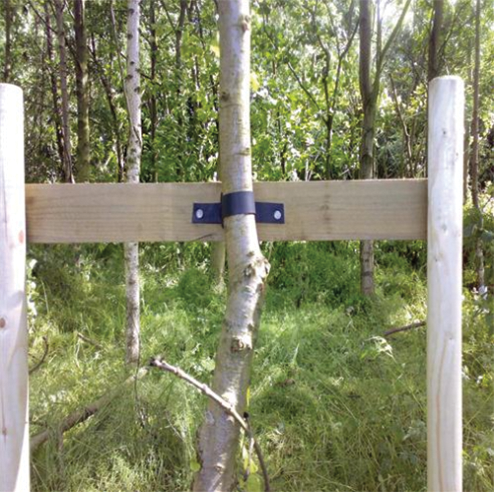
Done correctly, staking supports young trees while allowing natural movement that strengthens their trunks.
Newly planted trees, particularly those taller than 140 cm or planted in exposed areas, benefit from staking to prevent wind rock and root damage. Movement in the soil can tear delicate new roots, delaying establishment.
Most trees need support for the first 18 months to three years, depending on size and site conditions.
Stakes should be installed at the time of planting to avoid damaging the rootball later. Tree planting season in the UK typically runs from November to April, when trees are dormant and less susceptible to stress.
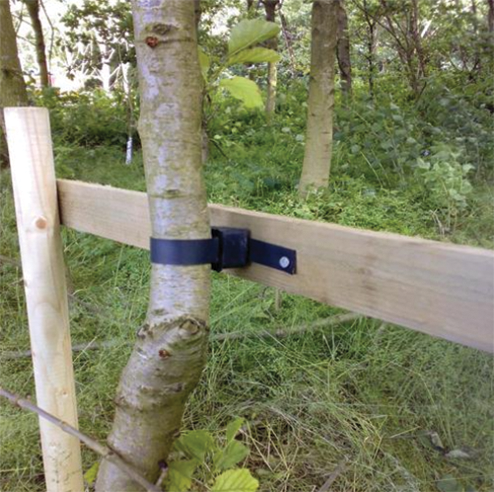
Several staking techniques suit different tree types and locations:
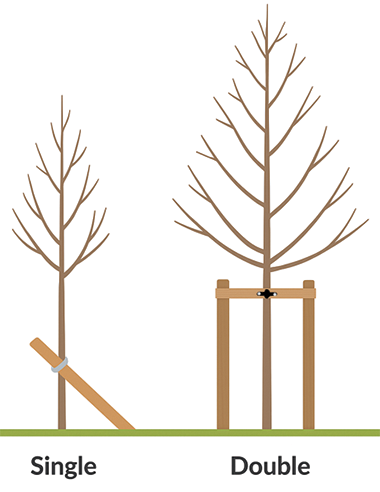
- Single angled stake: Ideal for most young trees. Insert the stake at a 45° angle, leaning into the prevailing wind. Allows the tree to flex naturally, promoting trunk strength.
- Double stake with crossbar: Best for semi-mature or pleached trees. Two stakes are placed opposite each other with a crossbar, securing the tree with ties.
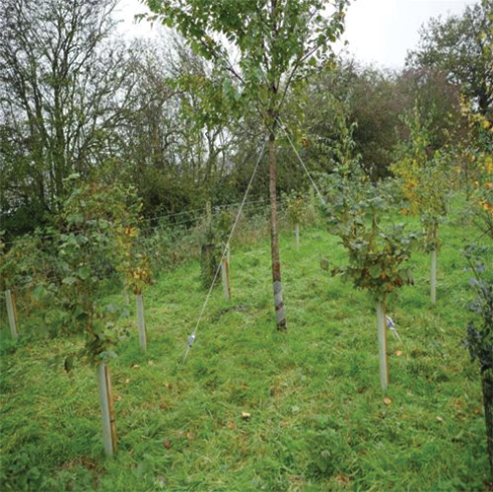
- Guying: Tree Anchor Wire Fixing System: Used for large trees, especially on windy sites. Anchors are placed at 45° angles away from the tree, with wires protected by rubber tubing to prevent bark damage.
Install tips:
- Stakes should penetrate at least 40 to 60 cm into the soil
- Use flexible tree ties with spacers to prevent rubbing
- Position stakes on the side of the prevailing wind so the tree moves away from the stake
- Avoid tying too tightly; allow a 2.5 to 3 cm gap between
Aftercare
Check stakes and ties annually. Loosen or replace ties as the tree grows and remove stakes once the tree can stand independently – usually within two to three years. Over-staking can weaken the trunk and hinder development.
By following these guidelines, you’ll give the tree the best start, ensuring it grows strong and stable for years to come.
Photos courtesy of Green-tech