
Paul O’Grady
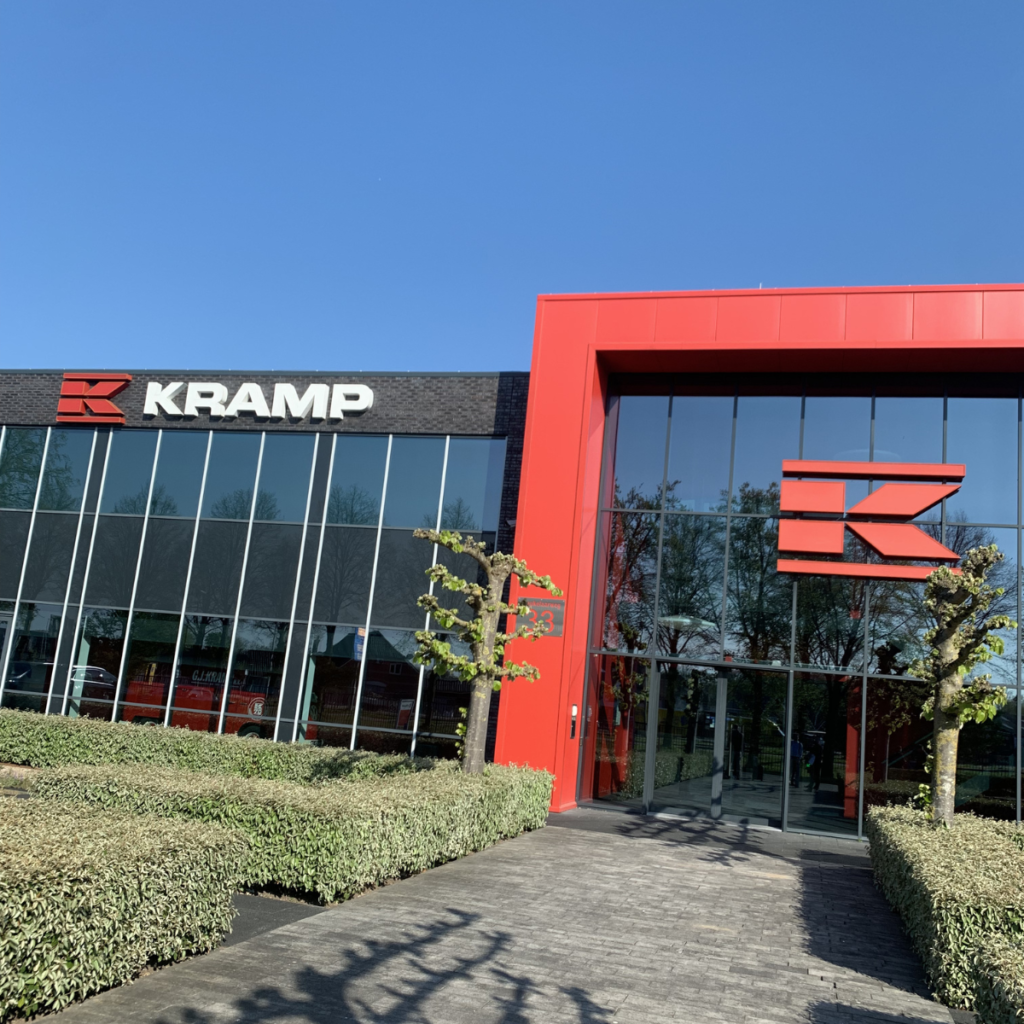
After a few weeks of build-up, the event finally arrived as I took the short flight from England to the Netherlands to visit Kramp’s headquarters in Varsseveld, around an hour and three quarters’ drive from Amsterdam.
I’ll get on to the trip in a minute, but first – a bit of background…
Kramp is Europe’s leading specialist in parts and accessories in the agriculture, forestry, landscaping and construction industries, with around half a million items in stock and ready to go at a moment’s notice. With over 3,600 staff from 80 nationalities working across 24 locations, they truly are a global powerhouse.
During the course of the trip, I learnt so much about Kramp’s culture, with its mission and purpose centred on the needs of its customers. Efficiency and accuracy are at the heart of what they do, with speedy next day delivery seen as a requirement rather than just a ‘nice-to-have’.
This was one of the first things explained to me and the other invited members of the press. Picture this: a niche part of a farmer’s machine fails. They’re now immobilised from a business point of view, unable to do anything until they can get their machine up and running again. This is where Kramp comes in.
Simply put, their customers rely on Kramp’s ability to deliver vital equipment in rapid fashion.
So this is their mission: to never let breakdowns slow down their customers’ business.
Arrival
We travelled to the factory in brilliant spring sunshine, appreciating the unique Dutch architecture along the way. Amid the windmills and cycle lanes, I noticed the high water level in the fields, which will surely be impacting many of Kramp’s customers, particularly in the agricultural sector, for the worst.
Upon arrival, it was immediately clear that this was a seriously impressive, modern facility. Passes collected, we walked through the canteen and chill-out areas, passing a series of meeting rooms designed for collaboration and creative problem-solving, evidently the kind of environment that enables Kramp to operate as a company with a €1Billion Turnover.
We learned a little about the History of Kramp, including that they were founded right here in Varsseveld by Johan Kramp and are celebrating its 75th year anniversary. We then set off on a tour of the complex, including the warehouse, where cutting-edge automation systems work alongside human input to power a distribution network that handles around 64,000 order lines every single day.
Across all their European locations, Kramp has around 500,000 items in stock, holding a vast and varied range of almost anything you can imagine across agricultural, garden parts, hydraulics & transmission, construction, shop & workshop and vehicle parts.
The One-Stop Shop
With so many items on hand, Kramp is constantly monitoring stock levels, meaning they don’t need to shut down to count stock like other companies may have to, allowing them to continuously meet their customers’ demand.
Remarkably, Kramp even has the capability to provide items which do not actually exist yet.
They provide standard items, but also offer custom-made parts. Customers supply specific instructions for the parts they need, which Kramp is then able to deliver on. It was explained to us that they won’t necessarily know what machine the parts they are making are going to be for.
Kramp’s goal is to remain the one-stop shop for the Agricultural sector, as well as the forestry and landscaping industries, with plans to move further into the construction market into the future. Their ability to supply both standard and niche items is key to helping them achieve this.
Reliability is crucial, especially in this industry. On average, a well-maintained tractor’s lifespan is around thirty years, but things can go wrong. That’s why Kramp’s mission is so important. It is a much better use of resources to occasionally have to change a faulty part rather than to buy a whole new machine.
The Business Outlook, Supply Chains & CSR
After lunch, we sat down once again in the meeting room, where Rutger Bruijnen, Chief Operating Officer of Kramp, joined us via video link to speak about the company’s 2030 business outlook.
There are many trends currently affecting the agriculture, forestry, landscaping and construction sectors, all of which are shaping Kramp’s culture and future strategy. Firstly, there’s the volatility and uncertainty of the global economy and political landscape, both of which can affect supply chains. While this brings challenges, it also creates opportunities.
The constant change in external factors makes it essential to remain agile and stay vigilant. Technological developments such as the AI boom, and the ever-increasing use of automation, has sped up the delivery process. Furthermore, the rise of e-commerce in recent times has influenced Kramp’s continued digitalisation. Obviously, Kramp has had to adapt to these evolving trends, and will continue to have to do so.
Then there’s the wider issue of climate change and how this affects their operations. We had a talk with Erik-Jan Smit, the CSR manager., who explained to us that Kramp sees genuine value in CSR – it’s not just a PR or box-ticking exercise. The big picture of protecting the planet, and futureproofing, is central to Kramp’s thinking.
From an outside perspective, it is clear that Kramp views it as their responsibility, as much as it is the average person, to be sustainable. One of their key achievements to date in this area is exceeding their CO₂ reduction targets.
We also spoke to Saša de Jong, Vice President of Supply Chain & Operations, who highlighted that despite Kramp’s rapid rate of growth, the changing of trends is a constant challenge. The company has responded however, examples being their web shop to meet increased e-commerce demand and providing next-day delivery to meet customer expectations.
A Trip to Remember
We then had a more detailed discussion with Mateusz Ciesielski, Head of Forest & Grass Care, where we learned more about Kramp’s strategy within this sector. Internally, Kramp distinguishes six industry segments within this: landscaping, partly and fully mechanised forestry, lawn and garden (professionals and consumers), and turf care. Segmenting the market in this way, across all industries they focus on, allows them to grow.
In the final activity of the day, at around 4pm, Kramp invited all members of the press, including The Landscaper, to order three items from their range of products free of charge, to demonstrate the efficiency of their supply chain and how easy it is to use their platform.
By the time I had arrived back at The Landscaper’s office in the UK the following day at 2pm, my shiny new items were waiting for me. They had been there for a while too.
As their slogan says, particularly from a customer’s point of view: It’s that easy.
To visit their site, click here
A special mention goes to the entire team at Kramp for their hospitality during the trip, including Will Charlton, Lexi Gilders, Leo Copping, Tom Melton, Mike Redding & Klaas Peter van de Pol.