
Pioneering research is shedding light on the species adapting to the assault on their environment, Gillian Taylor discovers
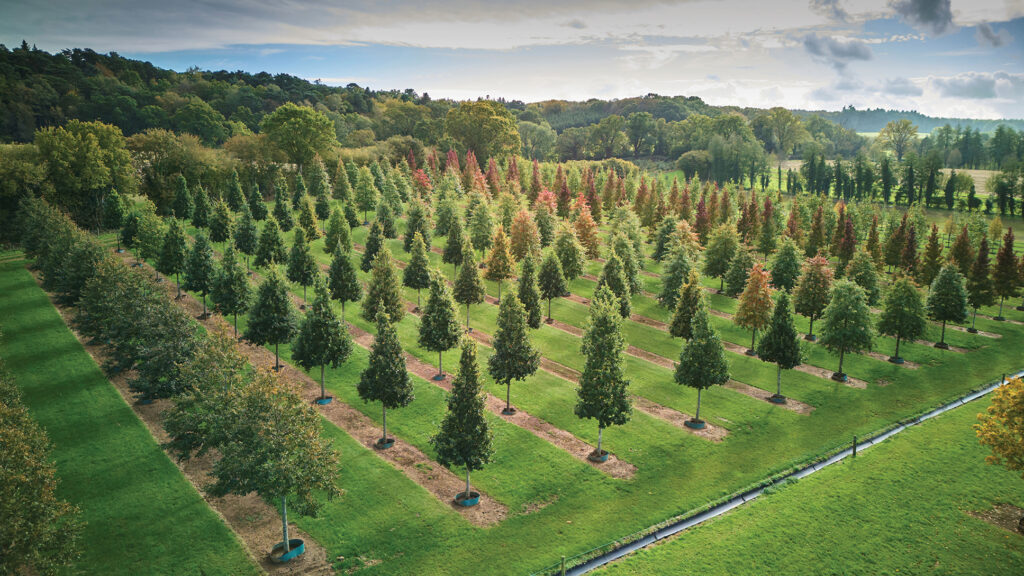
This year has been a landmark one for Hillier Trees, the largest producer of semi-mature trees in Europe.
The Hampshire-based specialist grower landed the 2026 Planet Mark Action and Innovation Award for its pioneering work to transform water management across their long-term tree production.
Planet Mark is a sustainability certification body that supports businesses to measure their carbon footprint, reduce emissions, engage employees and stakeholders and demonstrate progress through annual assessment.
The award recognised Hillier’s research-led approach to reducing the environmental impact of its nursery operations. Three years of research into sap flow, soil moisture and tree growth provided the evidence needed to rethink how water is managed for tree production.
The project saw Hillier replace a 40-year-old irrigation system with a more precise, research-led approach, resulting in around 70% less water use and an 89% reduction in fuel consumption.
At the recent GroundsFest event, Hillier published pioneering research exploring how climate change could influence the future of tree selection across the UK. The report, Suitability of Important Landscape Trees in UK Cities, was created in partnership with Urban Plant Lab and explores how commonly specified tree species could respond to projected climate conditions across the UK.
Urban Plant Lab is a not-for-profit research body dedicated to supporting better plant selection and more resilient green infrastructure through science-led research, guidance, and training.
Timely reminder
Across the UK, cities are warming, rainfall patterns are shifting and the conditions in which trees grow are becoming less predictable. A tree planted today may still be growing well into the next century, long after the climate in which it was selected has altered. This year’s heatwave and ensuing drought were a timely reminder of the challenges facing our landscape industry.
Before commissioning the research, Hillier consulted landscape architects, designers, contractors and local authorities to understand what was needed to support climate-aware tree selection.
The response was clear:
• 89% believe climate change will have a significant long- term impact on the tree industry
• 80% expect nurseries to offer more climate-adapted species
• 71% want scientific recommendations for species suited to future conditions
The key barriers identified were:
• Availability of suitable species
• Lack of information
• Customer preferences
Such feedback informed Hillier’s decision to commission Urban Plant Lab to assess which widely used landscape tree species are likely to remain suitable under future climate conditions.
The report discusses how climate change will reshape the future of tree selection across the UK. It predicts fundamental changes to which species should be grown, specified and planted over the next 50 to 75 years.
Better understanding
Seventeen important landscape tree species were evaluated for their suitability in 23 cities across the UK. The research did not aim to create a completely new list of trees for the UK. The intention was to better understand how the species we already grow are likely to perform as our climate changes, while identifying opportunities to introduce others that may be better suited to future conditions.
Adam Dunnett, production and amenity director at Hillier, discussing the project, commented: “We remain committed to a sustainability-driven, science-led approach to tree production and landscape resilience.
Central to this work is our focus on identifying, trialling, and promoting climate resilient tree species that can thrive under future environmental conditions.
“Trees are planted with the future in mind. Whether destined for streets, parks, housing developments or public spaces, some of the species selected today will still be growing well into the next century but as growers we have a responsibility to think well beyond today.”
Among the report’s findings is that while many familiar tree species are expected to remain resilient across much of the UK, others could become increasingly vulnerable in some regions as temperatures continue to rise.
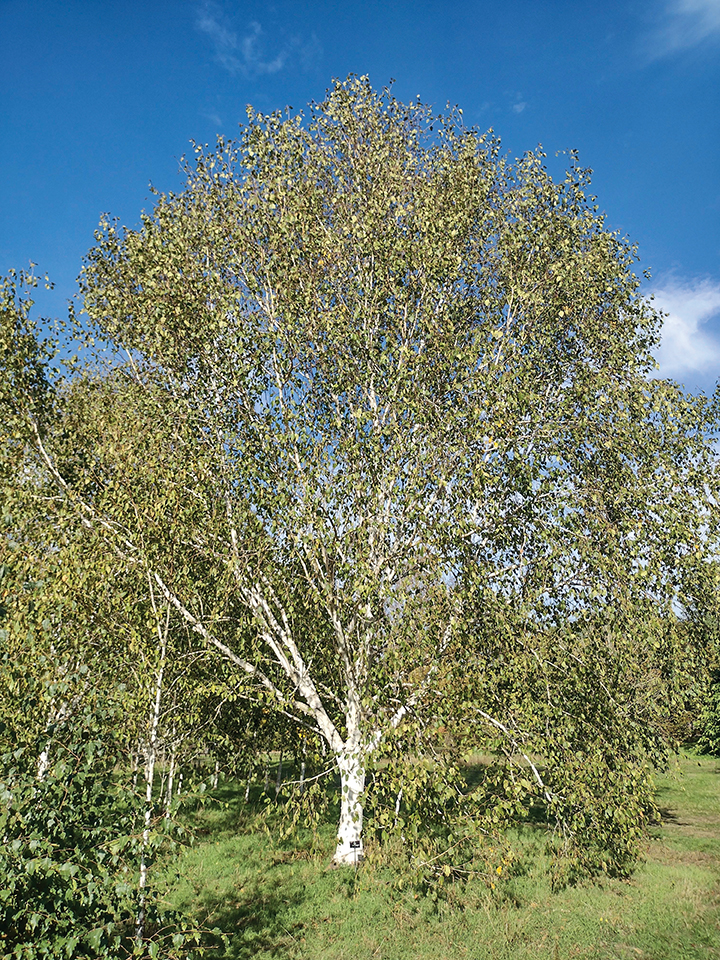
Silver Birch (Betula) is one species recognised as being at risk as the impacts of climate change develop. Many of us will have seen the tree struggling this year in the south-east of England. During a recent visit to RHS Garden Wisley, I spotted a number of them with brown, crispy leaves.
Wild cherry (Prunus avium), small-leaved lime (Tilia cordata), and large-leaved lime (Tilia platyphyllos) are also expected to become vulnerable in the South-east towards the end of this century. This could have a profound impact on our landscapes and influence the choices made by landscapers and garden designers in the medium term.
Opportunity for optimism
The report includes detailed climate suitability mapping and species analysis and should help landscape professionals make more informed decisions when choosing trees for their projects. There is an opportunity for optimism but also a requirement for careful planning.
A species performing well in the study was the Liquidambar styraciflua, the American sweetgum tree, which maintained its suitability across a wide geographical area well into the 2090s.
Broadly conical in habit, the glossy leaves give fantastic autumn colour, while its attractive corky bark is an additional feature. The species is grown at the Hillier Andlers Ash site.
The report includes key recommendations for action to mitigate the effects of shifting climate on our tree population.
a) Strategically diversify the palette of trees in production
b) Continue to engage with key stakeholders
c) Support mechanisms for bringing novel plant material into production within the UK.
For the adventurous designer, two excellent species for discerning clients with an eye to the future stand out.
Lagerstroemia, commonly known as crepe myrtle, is a small tree widely grown in areas of Western Europe, which appears to thrive in our new summer climate.
Surviving the change
The photograph below shows Lagerstroemia Tuscarora in full bloom at RHS Garden Wisley in August at the height of the heatwave. Until recently these plants rarely survived a British winter unprotected. Sustained high summer temperatures now ripen the new growth, helping protect it against winter cold. A great choice for landscapers and garden designers, the trees offer attractive bark, good autumn colour and attractive flowers.
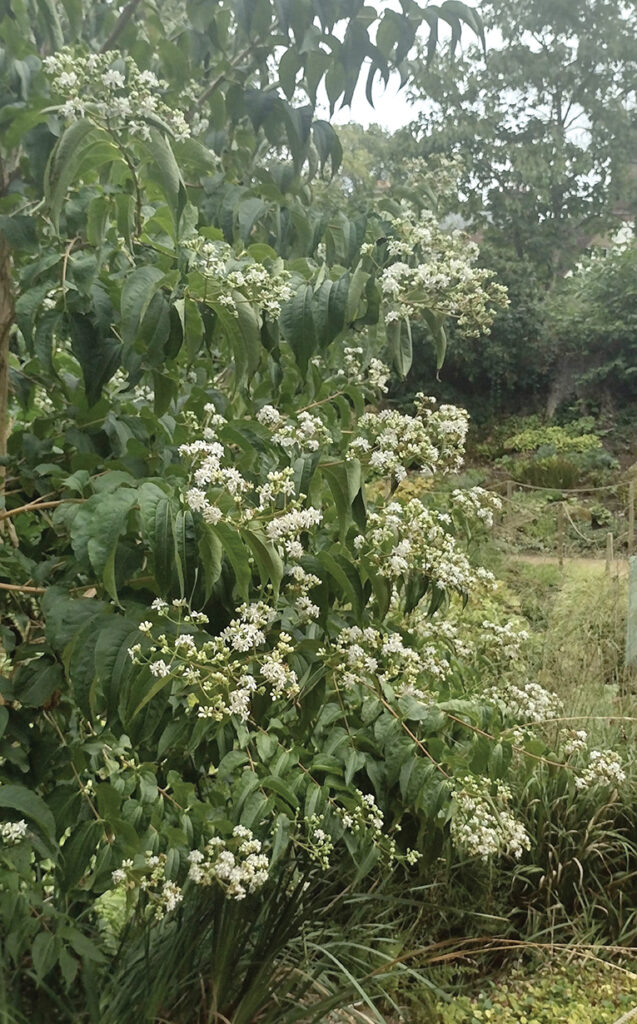
Heptacodium miconioides provides excellent late summer interest, with jasmine-scented white flowers followed by bright red calyces in autumn. Ideal for smaller gardens.
The Strong Roots report, published in October 2025, suggested that the UK government’s Net Zero Strategy requires 40,000 hectares of trees to be planted annually by 2030. It stressed the essential role trees play in sustaining biodiversity, mitigating climate change and enhancing wellbeing.
Trees are one of the most effective natural tools available for cooling urban environments, improving air quality and supporting biodiversity. As a nation we must grow, establish and care for more resilient home produced trees.
“Backing domestic production, establishment and long-term care is not just an environmental necessity,” insists Professor Alistair Griffiths, RHS director of science and collections. “It is an investment in the UK’s long-term health, wellbeing and economic resilience.”
The Hillier work is a key part of this effort and the report is an important resource for all of us in the landscape industry.