

A major project to spur climate resilience forms a key data source for action, finds Gillian Taylor
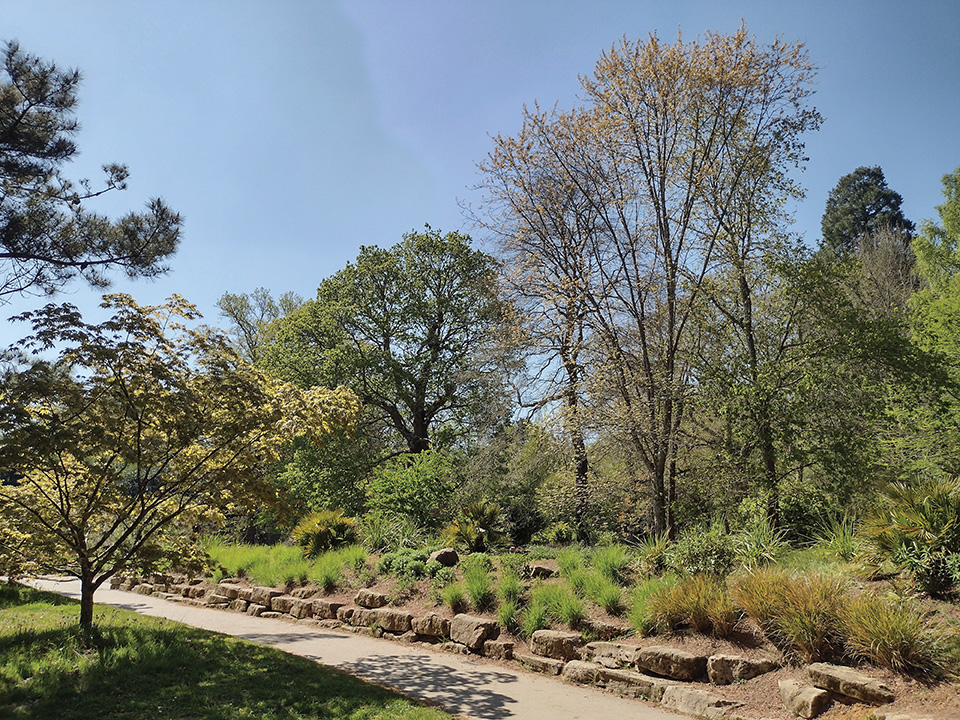
A ground-breaking garden opened in 2025 at The National Trust’s Sheffield Park and Garden in East Sussex.
The Garden for the Future, designed by three-time RHS Chelsea award-winner Joe Perkins, was the first major renovation project since the garden came under the Trust’s care in 1954, and is a BALI award-winner.
An experienced garden designer and landscape architect, Joe has designed, built and planted gardens for more than 20 years in the UK, Southern France and Spain.
Sheffield Park and Garden is renowned for its bold, innovative planting schemes, predominantly the work of Arthur Gilstrap Soames, who, 100 years ago, pushed boundaries with experimental planting and use of exotic species from around the world.
The Garden for the Future
In recent years, the garden team has recognised an urgent need to address climate change impact on plant and tree health, with significant specimens in the collections suffering with extremes in temperature and rainfall.
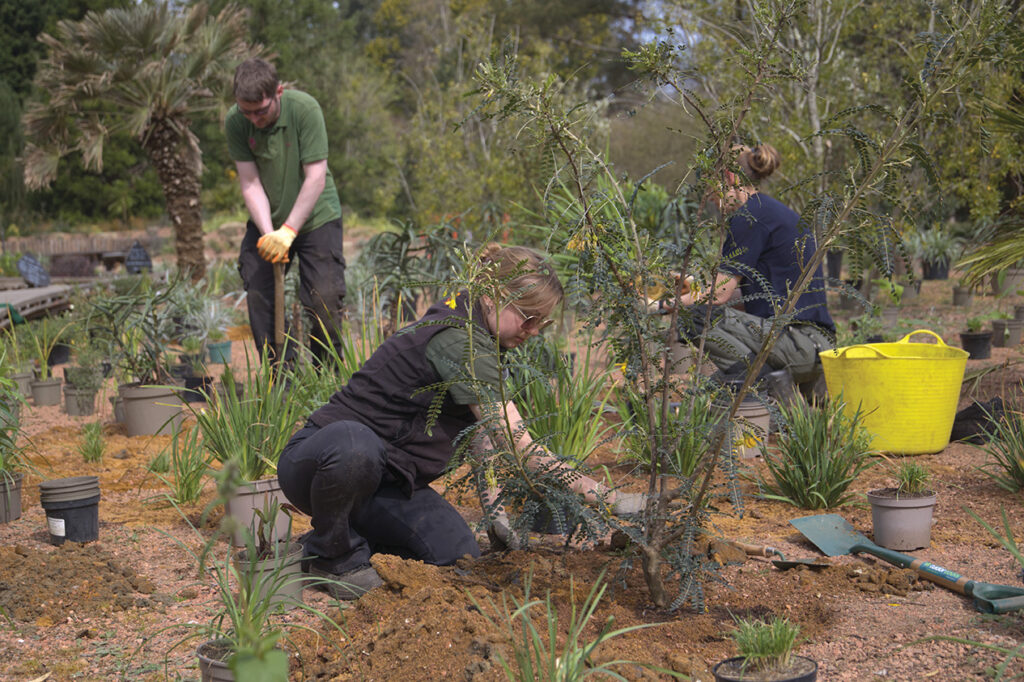
Accordingly, the project addresses the need for succession planting with increased resilience to climate change and will help inform future garden development.
I visited this April, a year after planting was completed and met site manager Pippa Reece and head gardener Jodie Hilton.
Developing the Garden for the Future came with many challenges including root protection zones of veteran trees which had to be considered, irrigation and drainage problems. These were successfully overcome by the team from The Landscaping Consultants, who worked with Joe to bring his plans to life.
Designed as a ‘garden within a garden’, this new area addresses the challenges posed by climate change and shows how historic gardens can adapt.
A real team effort
The planting of more than 5,000 plants and 30 new trees was a collaborative effort, with the help of volunteers, local community groups, and National Trust gardeners from across the region.
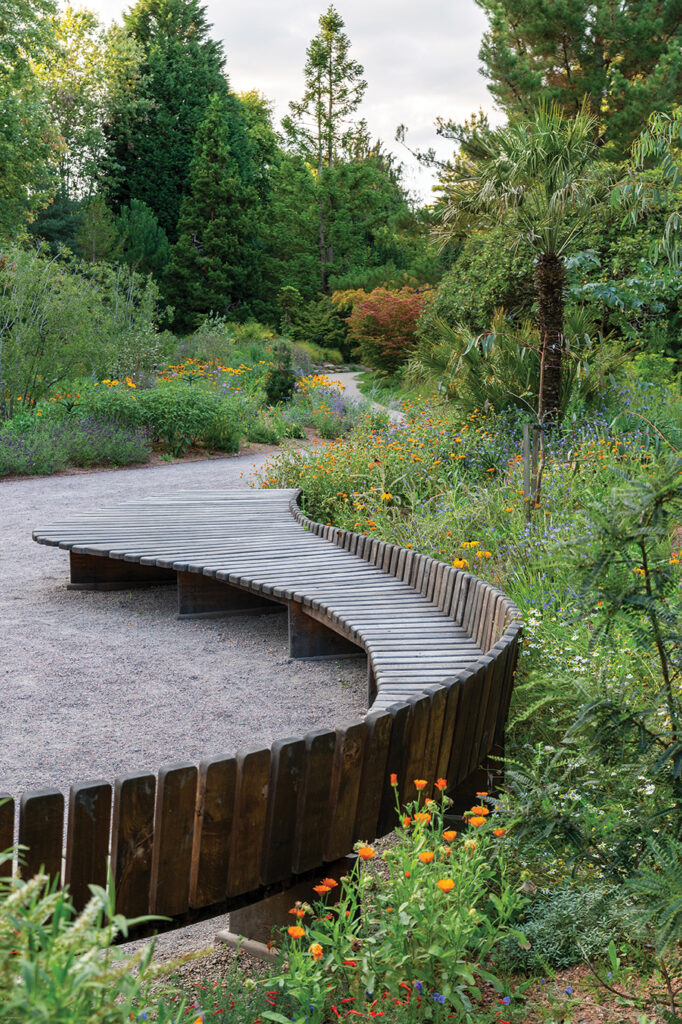
Hard landscaping and furniture installation were completed in 2024, and due to quarantine requirements, the permanent plants could not be installed immediately.
A temporary wildflower mix was sown to provide seasonal interest and support biodiversity throughout the summer. Unusually for a NT property, Jodie was keen to leave the area open to the public while the building work was conducted to allow visitors to experience the changes first hand.
Approaching from the Conifer Walk takes you from darkness into light, and a sense of increased energy in the new Garden. The impressive stone banks create privacy and interest, encouraging exploration to see what lies beyond.
The drought-tolerant species were planted in a growing medium of crushed brick and sand. Paths are permeable and, in keeping with the sustainability theme, reclaimed marine timber was used for the boardwalks and stone sourced locally.
The standouts
Close to the site is a 300-year-old oak tree whose root protection zone had to be carefully considered. Instead of bark mulch, the team used a living alternative of plants, including Azula and Mahonia Soft Caress.
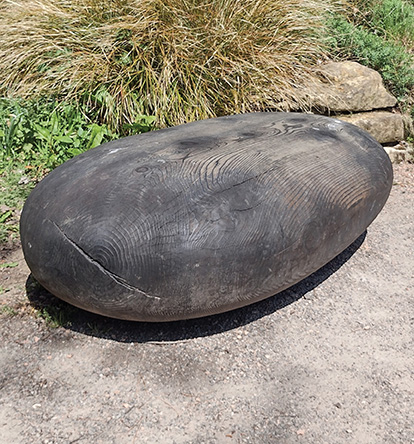
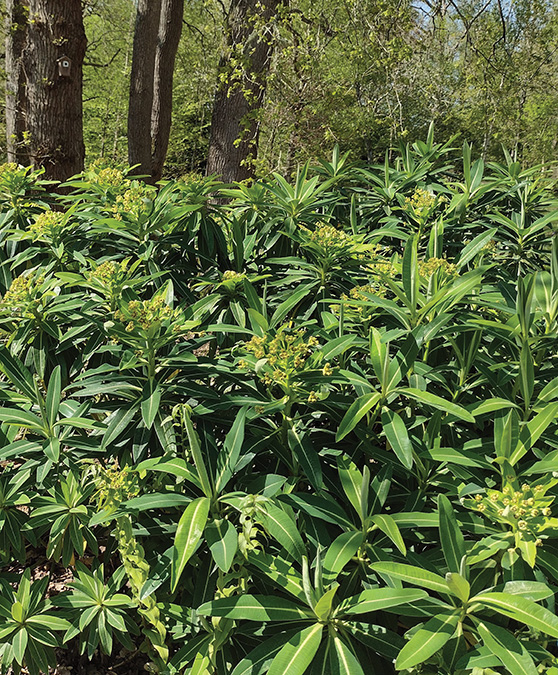
I was visiting early in the season, with the peak being later in the summer months. Two standout plants were the Euphorbia x pasteurii ‘John Phillips’ and the Sophora microphylla – the latter a New Zealand native, which flowers in late winter through spring. The unusual, charred Sequoia ‘pebble’ seats were surprisingly comfortable.
“The garden provides an opportunity to engage visitors with a different style of planting,” Jodie told me, “Adapted to a different climate and planting environment than they might see in the rest of the landscape at Sheffield Park.
“Early on, we identified the need for plants that can tolerate both extended periods of drought, and potentially heat, as well as cold winter temperatures.
We’ve created different planting habitats which will allow the team to explore plants from around the world that could be better adapted to future conditions.”
Future Planning
The team at Sheffield Park is working with Kew and Royal Holloway University to collect data on the trees, plants and wildlife in the garden to see which are coping with the shifting weather patterns and which may not be good choices for the future.
It has been an interesting journey for designer Joe Perkins – as this new venture will be a long-term relationship, relatively unusual in the world of garden design. There is the opportunity to observe and track how new and old species respond together in their new environment and Joe is keen to learn from the science behind the plantings’ future performance.
“It’s a kickstarter for how we can adapt historical gardens to be able to cope with the challenges we’re going to face in the future climatically,” he said.
The garden is innovative and experimental, and data obtained will be used to expand adaptive planting across the National Trust.
The Garden for the Future has already received awards from BALI and Sussex Heritage Trust, an acknowledgement of its skilful design, excellent construction and planting. Congratulations to the whole team and I look forward to seeing its progression over the coming years.