
A large invasive plant that can cause a painful skin reaction is in full flowering season, and experts at national trade body the Property Care Association (PCA) are urging site managers, developers and landscapers to be aware of the risks it can pose.
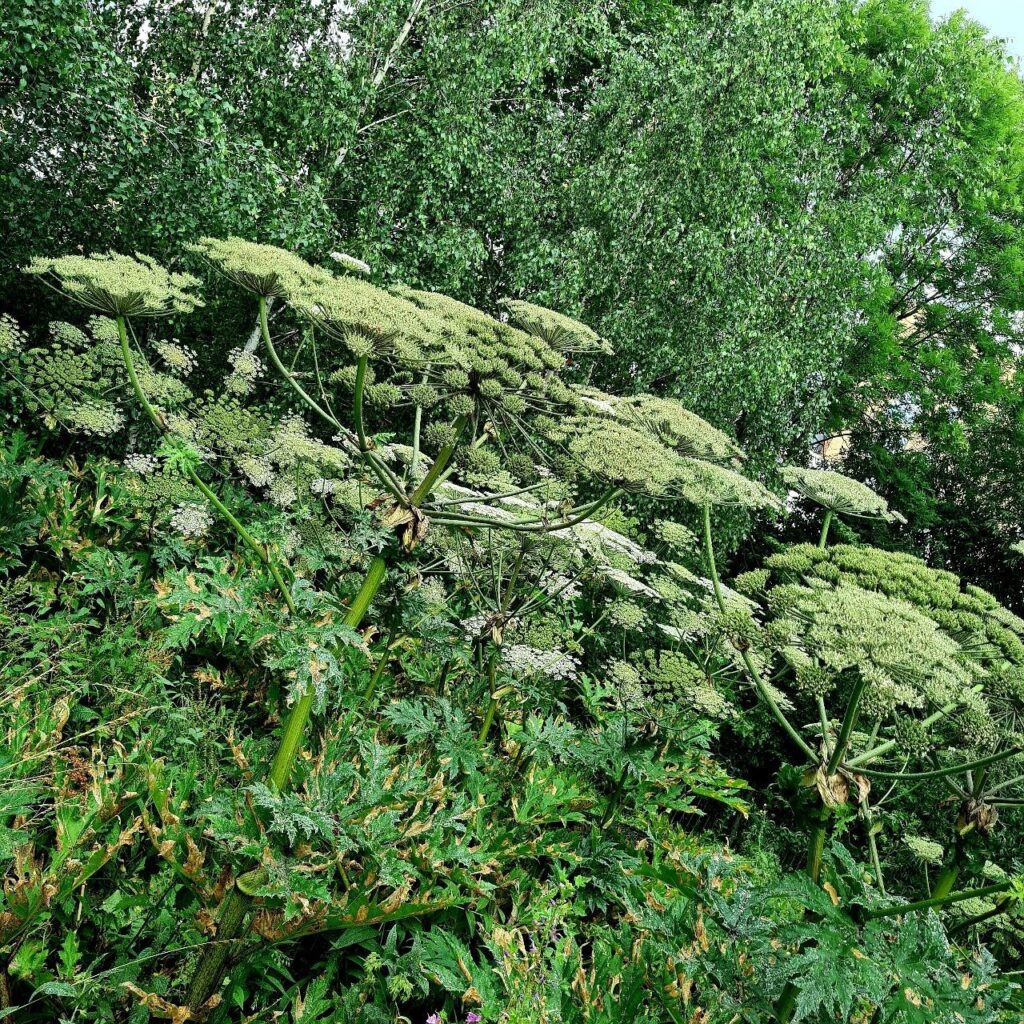
Giant hogweed can grow as tall as a residential streetlight, with large flower spikes that appear from mid-June onwards and leaves that can span more than a metre.
Contact with the plant causes a severe skin reaction that is antagonised by sunlight and can result in painful blisters which emerge between 24 and 48 hours after exposure.
A genuine risk
Daniel Docking is Technical Manager at the PCA. He said: “The distribution and frequency of Giant hogweed (Heracleum mantegazzianum) is increasing, causing significant problems for developers, site managers and landscapers due to the harmful nature of the leaves.
“It is a health and safety risk for both anyone working on a site as well as for any members of the public that may come into contact with it and biosecurity measures will need to be put in place, ensuring it is sectioned off.
“The plant is also a concern from an ecological standpoint, as it prevents sunlight from reaching the soil and can cause major changes to native plants and the invertebrates that depend on them.
“Often seen with Himalayan balsam it favours similar habitats by the side of waterways such as rivers and canals, where the water will carry the seeds, and also at roadsides, where the breeze created by passing cars can spread thousands of seeds along the way.”
Under the Invasive Alien Species (Enforcement & Permitting) Order 2019 it is an offence in England and Wales to allow Giant hogweed to grow in the wild without a licence or permit, and to do so could result in strict enforcement action by the Invasive Non-Native Species Inspectorate.
Wild Rhubarb
Daniel added: “A stand of Giant hogweed tends to be a large, distinctive feature as it can grow up to five metres tall, with huge rhubarb-like leaves that have earned it the common name ‘wild rhubarb.’
“In June and July, it produces large clusters of umbrella-shaped white flower spikes on stems up to five centimetres thick.
“PCA members have the knowledge and tools to undertake Giant hogweed removal safely, efficiently and in compliance with relevant legislation.
“We recommend seeking advice from a PCA member who specialises in invasive weeds before taking any action and if there is any doubt, stay away from the plant and use the PCA Plant Risk App to help identify it.”
The PCA Plant Risk App
The free PCA Plant Risk App will help confirm plant species using the Pl@ntNet database – simply upload a photograph ideally including leaves, stems, flowers and overall growth habit.
A short series of scenario-based questions follow, which will produce a hazard-rating indication along with advice that sets out what action should be taken, what to avoid and whether specialist help is needed.
In instances where a survey or management plan is strongly recommended, professionals can enter the site postcode to search for PCA members who specialise in invasive weed control.
The app is available at pca-innp.org/ and more information about Giant hogweed is at: www.property-care.org.
The PCA
The Property Care Association (PCA) is the leading representative organisation for the UK’s building protection industry.
Its skilled and audited membership operates across domestic, commercial and civil sectors in the structural repair, structural waterproofing, wood preservation, damp protection, flood remediation and invasive weed control industries.
Focused on the complete building envelope, their expertise protects the integrity and comfort of domestic buildings in both new build and refurbishment projects, guarding against moisture damage, damp, mould and decay.
Members also deliver cutting edge techniques to protect commercial and civil structures against water penetration and ground gases, as well using the latest scientific methods to tackle invasive weeds, including Japanese Knotweed, across all urban, rural and watercourse environments.
Find out more
Formed more than 95 years ago, the PCA is noted for its training and technical expertise, with knowledge built up over the decades combined with a focus on best practice and innovation forged in partnership with industry, academics, fellow trade associations and professional bodies, as well as local and national government partners.
The PCA is currently developing training programmes, guidance documents and other support material to support the government’s 2025 introduction of the Future Homes Standard.
For more stories like this, visit our news section.