
Availability of food, water and shelter can make outdoor human environments an ideal home for rodents but we can mitigate risk, writes Niall Gallagher, technical manager at the British Pest Control Association (BPCA)

Understanding species difference, characteristics, potential risks and relevant legislation are vital in creating landscaped spaces that deter rodents from moving in and settling down.
More than one in three professional pest management jobs focus on prevention – including pest professionals working with landscapers, architects, designers and engineers to build in barriers tor pests.
Species difference
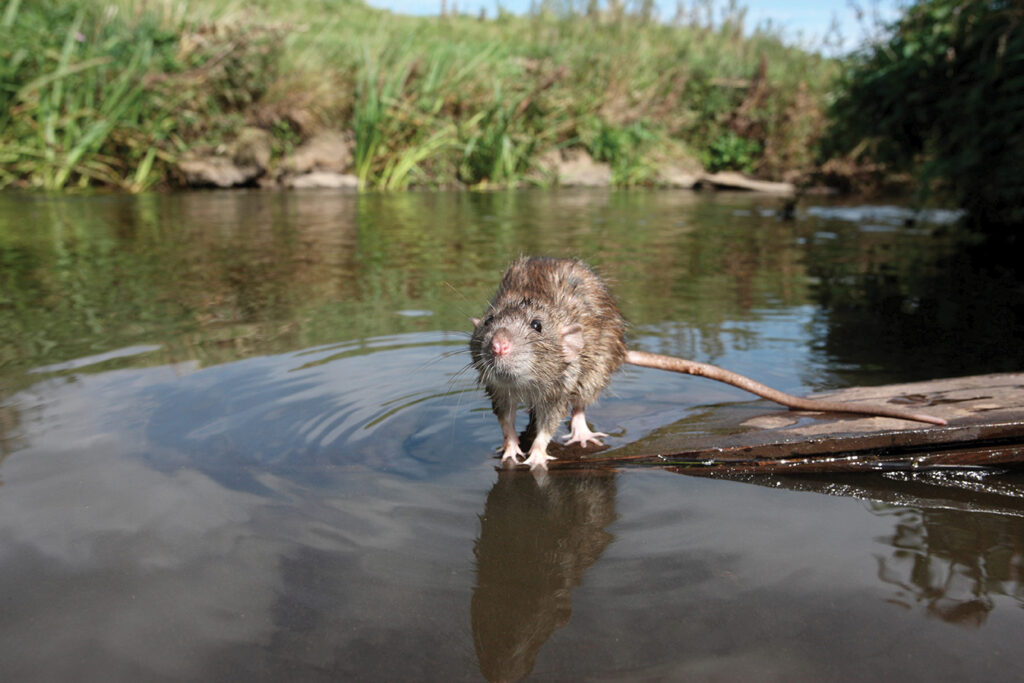
Rats can pose a problem in some areas of the UK. They are adaptable, agile, can be hard to spot and breed rapidly if undisturbed.
The brown or Norway rat is most likely to be seen, however the black rat may be spotted near coastal areas and ports.
Landscapers may well also encounter several mouse and vole species including:
• Wood mouse (Apodemus sylvaticus) – favours woodland and hedgerows
• Bank vole – prefers earth banks and wooded areas
• Field vole (Microtus agrestis) – often found in rough grassland
• Yellow-necked field mouse (Apodemus flavicollis) – most associated with broadleaved woodland, hedgerows and rural gardens
• Common vole (Microtus arvalis) – mainly spotted in meadows, heathland and agricultural fields
• Water vole – found near rivers, streams, ponds and marshes
• Shrew – not a rodent but sometimes mistaken for a mouse or vole.
To the untrained eye it can be tricky to differentiate between species – a mouse may look like a young rat and vice versa, while water voles can be mistaken for rats.
Tip: Identification is key. Understanding the species dictates how to avoid or tackle the problem and how to remain compliant with the law. Two of the above are protected under the Wildlife and Countryside Act 1981 for example.
Characteristics
While most rodents share some characteristics – both rats and mice have rapid breeding cycles and need to gnaw to maintain their teeth – distinct differences need to be taken into account for effective prevention, proofing, management and control.
Rats can jump large distances relative to their size, can fall from a height of up to 50 feet without injury and will return repeatedly to feast at one food source but need access to water.
Wood mice will excavate burrows or dens anywhere that protects them from predators such as cats, foxes, birds and rats.
Mice are crepuscular – mainly active at dawn and dusk – and can travel at speed along ropes, cables and wires.
They don’t need water but will mark their territory with urine and visit many sources of food.
Tip: Expert insight and understanding of the different characteristics of rodent species can be crucial in understanding how landscape features can attract or deter pests.
Potential risks
Many common features of gardens, parks and outdoor amenity spaces can attract rodents because they provide shelter, food or water or route of travel.
Rats and mice will nest in rarely used sheds and storage areas, particularly if there are any entry points around cables or pipework, as well as outdoor furniture covered and stored outside, or permanent street/park furniture with hollow components such as tubular table legs, bollards, climbing frames or signage.
Woodpiles and compost bins can also offer potential harbourage, although hedgehogs may also make use of these.
Planting choices can inadvertently create multiple opportunities for rats and mice. Planting too close to a building can damage mortar or undermine foundations, allowing access into cavities, while tall grass or hedgerows can create sheltered highways and climbing plants on buildings can effectively become a rodent ladder.
Fallen fruit from shrubs and trees towards the end of the year can become a feast for rodents, while vegetable beds are also prime targets along with bird feeders.
Finally, human activity plays its part. Rodents will mostly avoid high-traffic areas during the day but in quieter hours, dropped litter and easily accessible public bins offer an easy food source.
Remain Vigilant
Landscapers can also fall foul of legislative risks due to lack of knowledge or understanding of rodent activity.
Water voles and all species of shrew are protected in the UK under the Wildlife and Countryside Act 1981. It is an offence to kill, injure or take them away from their homes or disturb them or their place of shelter.
Tip: Working with a pest professional such as a BPCA member can help identify ways to incorporate features without attracting rodents, from placement of wildflower corridors to avoid creating hidden rat highways to protecting key infrastructure such as power supplies and pipework.
The government endorses BPCA member businesses via the TrustMark quality scheme and they must carry the correct insurances and be trained and qualified technicians assessed to the British Standard in pest management EN 16636 and follow BPCA’s Codes of Best Practice.
To find a BPCA member visit: bpca.org.uk/find