
Moving over to battery power needs careful consideration, cautions Josh Smith of testing house Machinery Nation, who also eyes up the next big power surge

We test and review many kinds of garden, construction, agricultural and power tools.
One of the biggest changes in recent years has been the rapid development of battery-powered machinery.
We’re often lucky enough to get our hands on latest innovations before many others, to give us a first-hand view of where the industry is heading.
Battery power is now a major part of most manufacturers’ ranges, and for many professionals it has become their everyday choice. But I understand that battery isn’t for everyone. The initial investment in batteries and chargers can be significant, and you’ll want that investment to genuinely pay for itself.
My advice is simple – speak to those who use battery tools for a living. Ask how they get on day to day, what their running times are like and whether battery has genuinely replaced petrol for them. It’s also worth getting a demonstration from a manufacturer and trying the equipment yourself.
What has surprised me most is how many professional users tell me they wouldn’t return to petrol. Modern battery tools can deliver performance that matches, and sometimes exceeds, petrol equivalents.
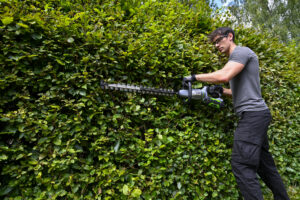
For those considering the switch, hedge and grass trimmers are an excellent place to start. They offer good runtimes, little or no vibration, lower emissions and generally reduced servicing requirements – benefits quickly noticeable when a machine is in daily use.
What’s next?
One technology I’ll be watching closely is sodium-ion. Moving from lab development into commercial production during 2026, sodium-ion batteries offer interesting advantages, including lower cost and more abundant materials, good safety, long cycle life and particularly strong cold-weather performance. Their main drawback remains lower energy density compared with lithium-ion.
That could make garden machinery a very interesting application however. Some landscaping and garden tools don’t necessarily need the highest possible energy density. High discharge current, robustness, safety, cost, storage life, cold-weather performance and ability to withstand thousands of partial charge cycles can be equally important.
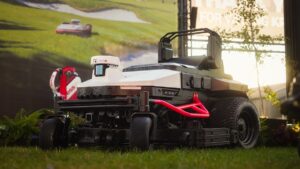
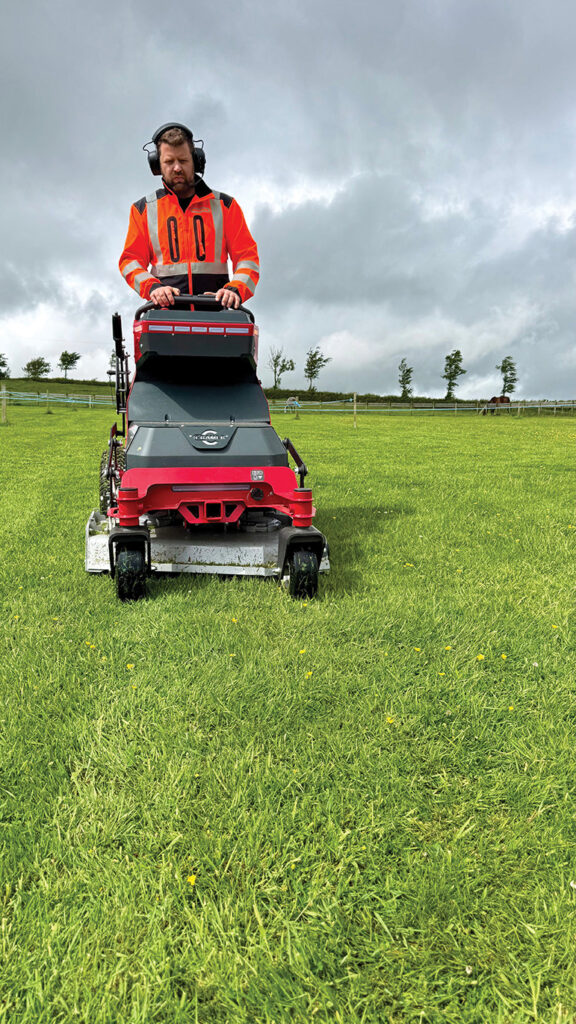
Sodium-ion could become particularly attractive for larger mowers, where the additional weight may prove less of an issue.
Looking ten years ahead, I expect faster charging, longer runtimes, smaller, more compact batteries and increasingly large machinery running entirely on battery.
But will those currently offering petrol and battery ranges eventually move exclusively to battery?
Many manufacturers will launch products at GroundsFest, so ensure you explore every area of the show – and come and see us at the Machinery Nation live demo area.