

As urban development continues to intensify and infrastructure projects expand, noise pollution has become an increasingly important consideration in landscape design.
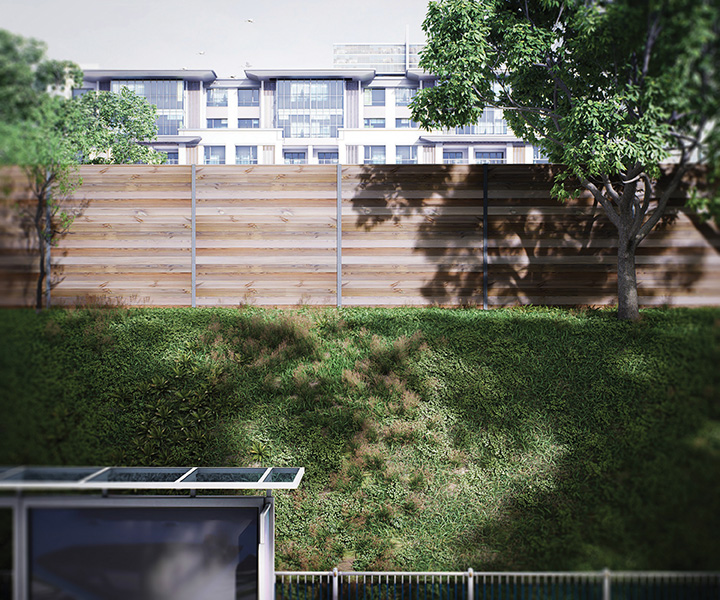
Whether beside busy roads, railway corridors, industrial facilities or high-density residential developments, outdoor spaces are under growing pressure to balance functionality, aesthetics and occupant wellbeing. Acoustic fencing is emerging as a key solution in achieving that balance, argues fencing specialists Birkdale.
“Unlike conventional boundary fencing, acoustic fencing is engineered to reduce the transmission of airborne sound,” states Birkdale founder and chairman John Abernethie. “Its primary purpose is not simply to define a perimeter or provide privacy but to create measurable reduction in noise levels to help improve comfort and practicality outdoors.
“Acoustic barriers work by interrupting the path of sound waves, reflecting some energy away while absorbing or slowing transmission of the remainder through dense, carefully constructed materials,” John explains.
“The effectiveness of a system depends largely on its mass, density and overall construction. Heavier, well-sealed barriers are generally more successful at reducing noise than standard garden fencing.”
Wide application
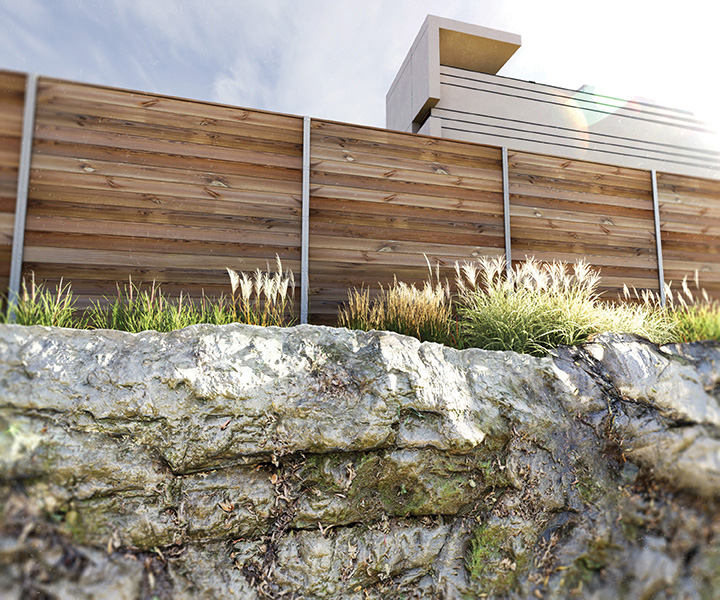
For landscape professionals, acoustic fencing is increasingly relevant across a spread of sectors.
“Residential developments are among the most common applications,” John reports. “As housing schemes are built closer to transport corridors and urban centres, planners and developers are often required to show how external amenity spaces will be protected from excessive noise.
“Acoustic fencing can help create more pleasant gardens and communal areas while supporting planning requirements and improving resident satisfaction.”
Commercial environments also benefit significantly from acoustic barriers,” John maintains. “Offices, retail parks and business campuses often use acoustic fencing to reduce noise generated by traffic, loading areas or neighbouring operations.
“In these settings, quieter outdoor spaces can contribute to employee wellbeing and enhance the overall quality of the environment. Similarly, schools, healthcare facilities and care settings increasingly utilise acoustic fencing to create calmer surroundings that support concentration, recovery and general wellbeing.”
Transport infrastructure remains another major area of application. “Highways, railways and major infrastructure projects often rely on acoustic barriers to mitigate the impact of noise on nearby communities. In many cases, reducing noise levels can help ease planning concerns, minimise complaints and improve community relations over the long term.”
Choice of material
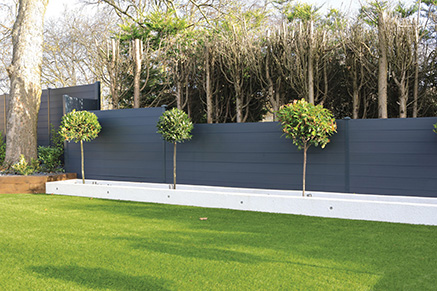
The effectiveness of sound reduction is largely determined by the materials chosen. Timber remains one of the most widely specified solutions for acoustic fencing but not all timber performs equally, says John.
“Dense, pressure-treated softwoods such as slow-grown redwood are often favoured because they combine durability with the mass required for sound reduction. Treatment quality is particularly important, as acoustic barriers are long-term installations that must withstand demanding external conditions while maintaining structural integrity.”
For specifiers, selecting the right acoustic fencing system involves more than simply choosing a thicker panel. “One of the most important considerations is independent testing. Acoustic performance should be verified against recognised standards, with testing conducted on complete systems rather than individual components.
“This ensures posts, panels, seals and fixings all contribute to the stated performance and that real-world installation conditions are reflected in the results. Independent certification also allows meaningful comparisons between products and reduces the risk of over-specification.” John states.
Valued component
As expectations around environmental quality continue to rise, acoustic fencing is becoming an increasingly valuable component of landscape design. “By combining robust specification, independently tested performance and thoughtful integration into wider schemes, landscape professionals can help deliver quieter, more comfortable outdoor environments that support both people and place,” John concludes.
“Manufacturers such as Birkdale have responded to growing demand with purpose-designed acoustic fencing systems, including its Sound Shield Pro® range, which has been developed for applications spanning housing, healthcare, commercial developments and transport infrastructure.
“The continued evolution of tested, high-performance solutions is giving specifiers greater confidence in their ability to address noise challenges while meeting increasingly stringent performance and compliance requirements.”