
The mission to attract more women into landscaping and groundcare continues as sector bodies and training colleges strive to reach an audience seemingly shy of entering what’s touted as a stimulating and rewarding profession.
Women are answering the call but it’s a painfully slow process. But who better than women already working in these sectors to put out the message about what drew them into a working life where grass and turf figure so strongly.
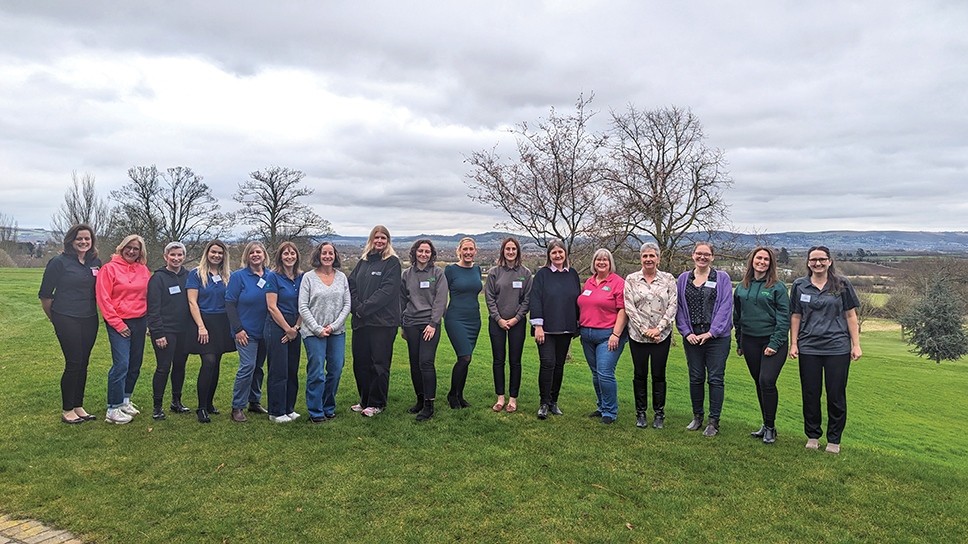
Within member body the UK Lawn Care Association’s numbers has sprung up a group committed to attracting women into its ranks. The emerging Women in Lawn Care working group is starting to make its mark in seeking to reach out to would-be fellow professionals, so The Landscaper asked group members for their thoughts about the sector, its benefits and how to move forward.
“Prioritise representation and active outreach”
Katie Arnold, director and chief finance officer, TopGrass UK Ltd, who leads the Women in Lawn Care working group

“Having co-directed and grown my family business for over a decade, I have observed distinct demographic trends within the lawncare sector. Historically, women in this industry have primarily occupied administrative or office-based roles, entering the field through family connections.
“While our industry excels at supporting women in corporate and administrative positions, a noticeable gap remains in field-based roles. In recent years, however, it has been fantastic to see more women-owned new start-ups, and long may that continue.
“To diversify our workforce and attract more women to field positions, we must prioritise representation and active outreach. Because the lawn care sector is frequently unknown and thus overlooked by jobseekers, our recruitment strategies often target parallel industries, such as delivery and postal services, which share similar operational demands.
“To bridge the gender gap, we must ensure women are visibly represented in industry media, supplier brochures and company social channels; quite simply, candidates need to see themselves in these roles to consider them.
“Furthermore, establishing a presence at school, college and university career fairs will allow us to showcase the scientific, academic, and practical merits of the industry to the next generation of diverse talent.
As an industry, it is our joint responsibility – and each company can contribute – to increase visibility and reach female jobseekers.”
“Social media has a huge role to play”
Laura Abbott, owner of The Lawn Ritual
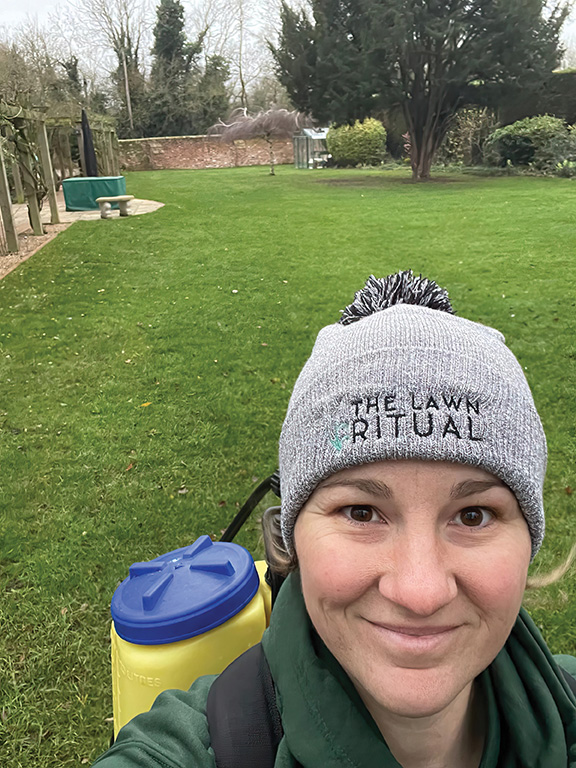
“One of the biggest reasons we don’t see more women in lawncare is that many simply don’t realise it’s an option.
“Before starting The Lawn Ritual, lawncare wasn’t an industry I had ever considered. Like many people, I assumed it was just mowing grass. It was only once I started learning more that I realised how much knowledge, problem-solving and customer care is involved. No two lawns are the same, and that’s one of the things I enjoy most about it.
“For me, the answer is visibility. The more women we see out treating lawns, running businesses and sharing their experiences, the more likely others are to think, ‘I could do that too’. Social media has a huge role to play here because it gives us the opportunity to show the reality of the job and the people behind the businesses.
“I’ve found the lawncare industry to be incredibly supportive, with people willing to share knowledge and help others succeed. Continuing to build those networks and encouraging new people into the industry will make a real difference.
“Lawncare can offer flexibility, independence and the opportunity to build something of your own. Sometimes all it takes is seeing someone else doing it to realise that it’s a path worth considering.”
“Attitude, reliability and willingness to learn matter most”
Clare Miller, owner of Absolute Lawncare
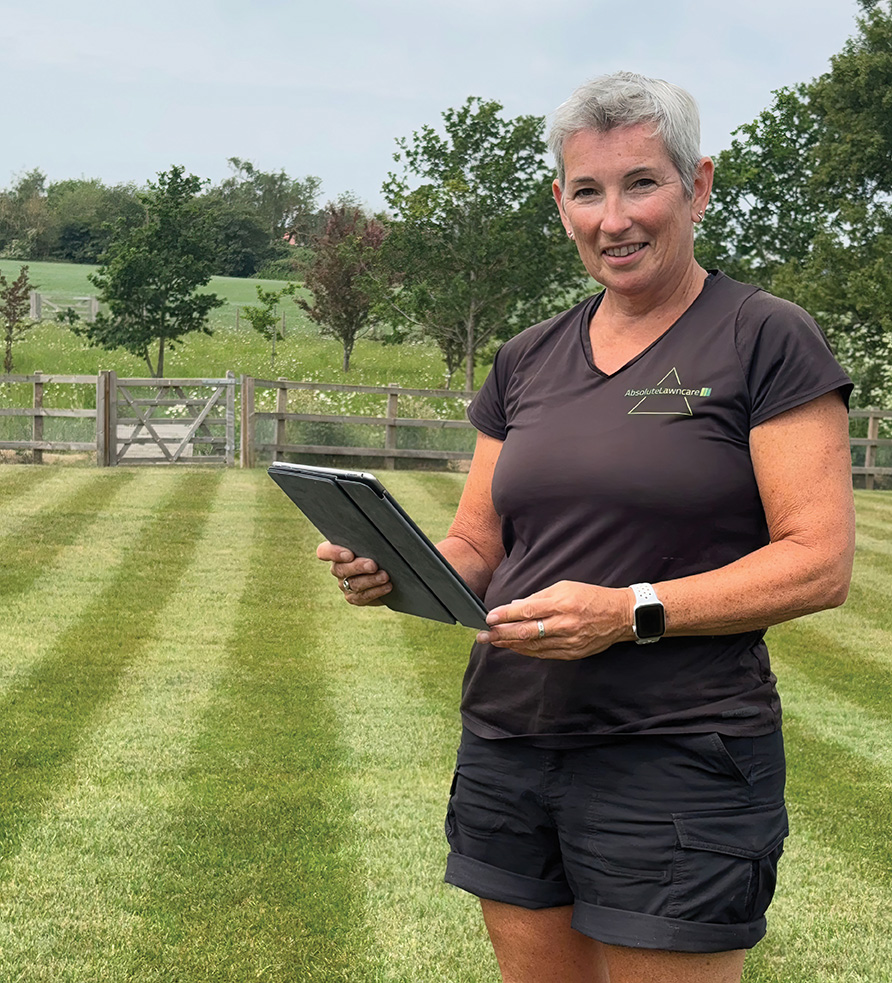
“One of the biggest misconceptions about lawncare is that it’s all about physical strength. Modern lawncare is as much about communication, observation, problem-solving and customer service as it is about practical work.
“Interestingly, around 75% of my customers are actually the women of the house. They’re often the ones making decisions about the garden, noticing changes in the lawn, asking questions and valuing reliability and good communication. Building trust with customers is a huge part of the job.
“The industry itself is changing too. We’re seeing more robotics, more focus on sustainability, more awareness around climate challenges and far more emphasis on professionalism than there used to be.
Lawncare today involves understanding soil health, diagnosing problems, managing expectations and adapting to changing conditions – it’s a skilled industry with many different sides to it.
“There’s a real opportunity to encourage more women into lawncare through better training and support. In my experience, attitude, reliability and willingness to learn matter far more than whether somebody fits the traditional image of the industry.
“For me, variety is one of the best parts of the job. You’re outdoors, active, meeting different people every day and seeing tangible results from your work. No two lawns, customers or challenges are ever quite the same.
As the industry continues to modernise, bringing more women into lawncare will only strengthen it further – not just through representation but through the wider range of skills, perspectives and professionalism that helps any industry grow.”
“More focus on the many transferable skills women can bring to the job”
Abbie Latham, co-owner of AJ Lawncare
“My introduction to working in lawncare came when my husband set up a business in 2011 and I helped him with his admin work around my own separate job. At that time, it wouldn’t have occurred to me that I would ever become more involved, as it felt like a job that I wouldn’t have the physical strength to do.
“My role in the business has increased and adapted over the years, and I’m now full time, spending around 80% of my time on lawns rather than in the office. The role certainly requires a reasonable level of fitness but I’ve yet to come across any job that I’ve been unable to do due to not being strong enough.
“I’d love to see lawncare companies focusing on the many transferable skills that women can bring to the role. Customer service, problem-solving, ability to deal with last-minute changes when the weather isn’t co-operating and a willingness to learn are all just as important as physical capability. Women from a variety of work backgrounds, and those who have taken time out of work, can bring so much value even if they’re new to the industry.
For women who may be considering a move into lawncare, my experience has been nothing but positive.
Taking on a new lawn and seeing the improvement with each visit is hugely rewarding and it’s a really friendly industry, with many support networks available for people at any stage of their career.”
“The more women who step into the industry, the more it will evolve”
Ellie Shutt, customer service manager for TopGrass UK Ltd
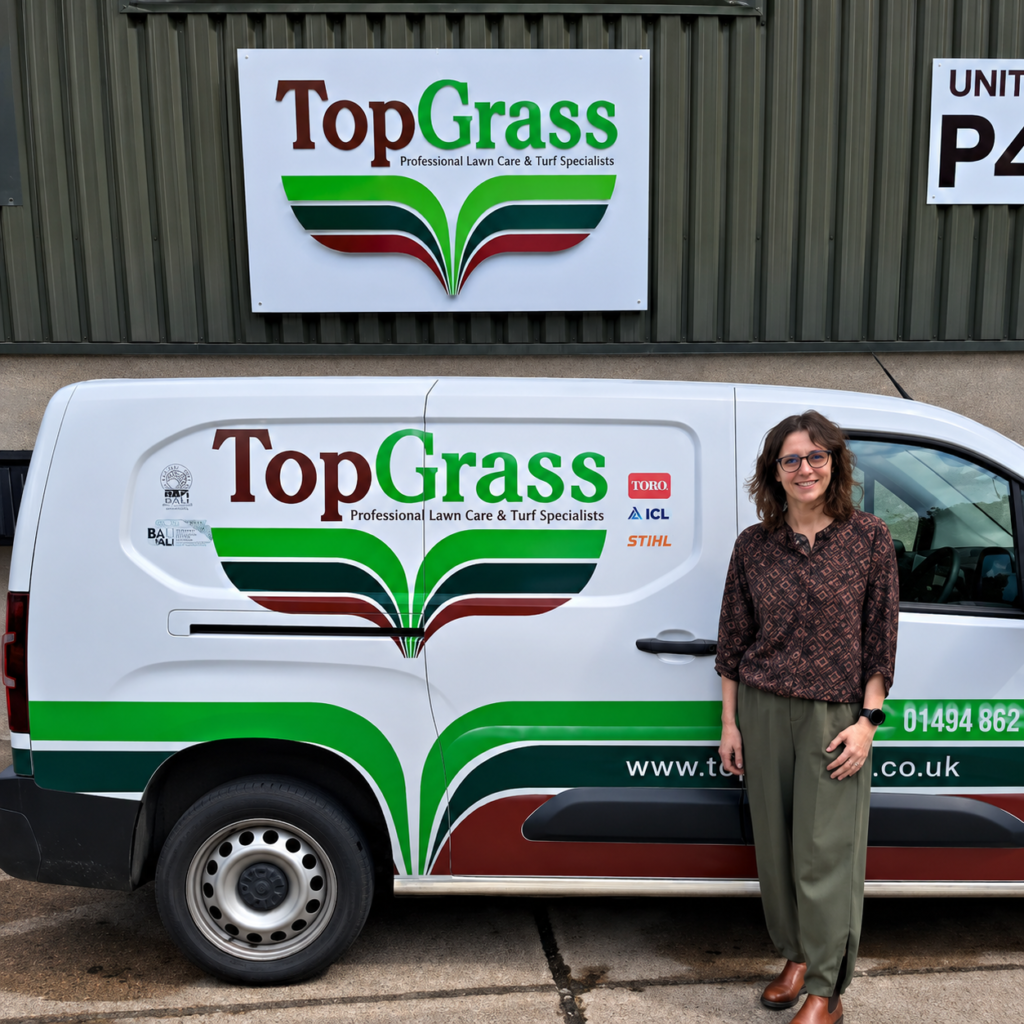
“I grew up with parents who always pushed me to try anything, so stepping into a male dominated industry never really put me off. If anything, it felt like a challenge I wanted to take on. And once I got into lawncare, I realised how much more there is to it. Every day is different, you’re always speaking to new people and there’s a real sense of purpose in helping someone improve their lawn.
“What puts women off is feeling they don’t know enough about lawns. But the knowledge isn’t something you’re expected to have from the start; you learn it bit by bit. That’s exactly what I did. And now, with the experience I’ve built, I’m able to teach others too. That’s why more women should see lawncare as a real career option. It’s active, rewarding, and full of opportunities to grow.
“Women bring so much to this industry, from communication skills to attention to detail and the more of us who step into it, the more the industry will evolve.”