
The triple whammy of rising costs, labour shortages and higher environmental expectations continues to impact landscaping but, states manufacturer Husqvarna, autonomous mowing is helping the sector maintain high-quality green spaces with “more efficiency, environmental consideration and innovation”.
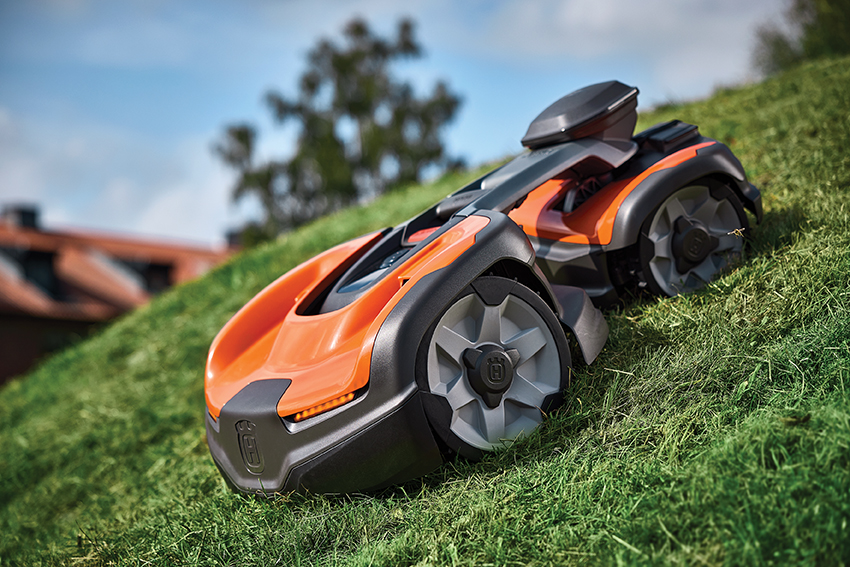
Founded in the late 1600s, the Swedish business launched reportedly the world’s first robot mower in 1995 to lay the groundwork for what has become “a mature, proven technology applied across thousands of properties worldwide”.
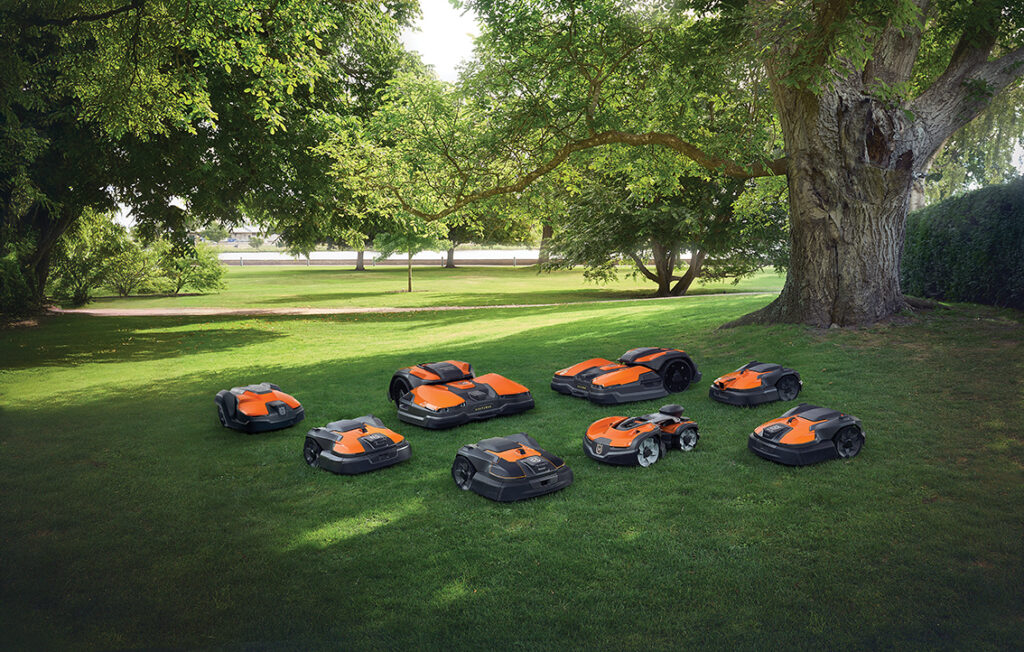
Its commercial robot mowers span multiple applications, from smaller, complex green spaces to larger areas such as parks, sports grounds and multi-site facilities.
The need for the shift to robots is clear, Husqvarna maintains. “Industry data shows labour shortages remain one of the most pressing challenges facing landscaping businesses, with a significant proportion of contractors reporting difficulties in recruiting and retaining staff.”
Rising fuel prices and mounting expectations around sustainability add further pressure to maintain margins while delivering consistent quality, it adds. Husqvarna’s autonomous mowers seek to address these challenges by automating one of the most time-consuming tasks in groundcare. Operating continuously and independently – apart from charging times – robotic mowers limit reliance on manual mowing “to allow teams to focus on higher-value activities such as detailing, landscaping enhancements and client service”.
Husqvarna’s whitepaper
Labour can account for 60 to 70% of total lawncare costs, research referenced in Husqvarna’s white paper, Commercial Robotic Mowers for Landscapers, notes.
“Autonomous mowing offers the potential to significantly reduce those costs depending on application,” the company states.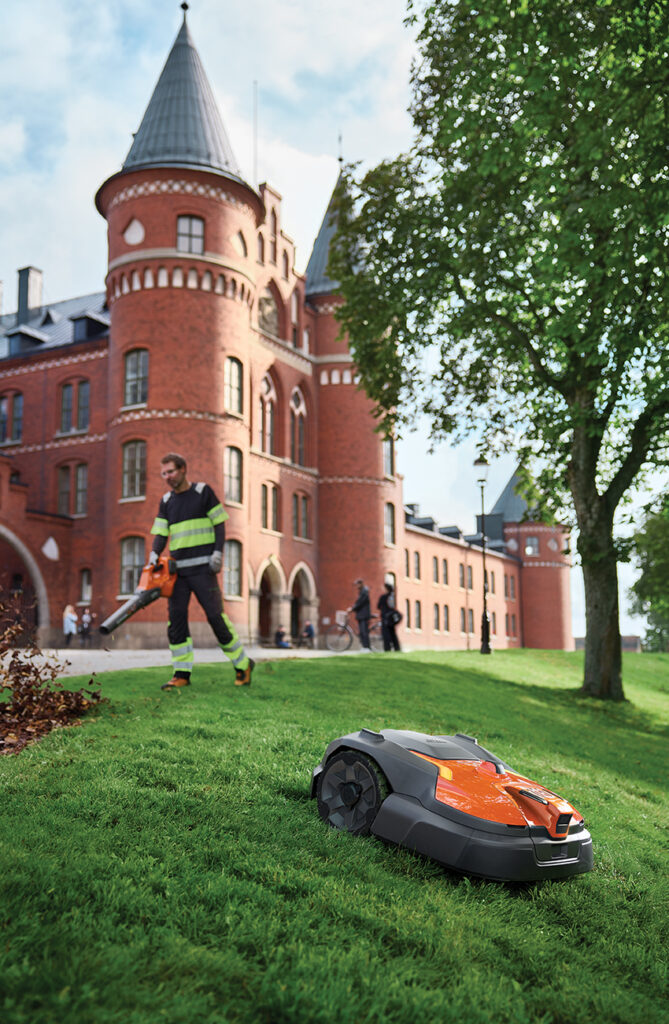
“Because robotic mowers remain on site and recharge automatically, they reduce the need to transport heavy machinery between jobs – saving time and operational expense.”
Performance and turf quality also factor in the equation of benefits. “Husqvarna robotic mowers cut frequently, removing only small amounts of grass at a time to produce fine clippings that are returned to the turf, supporting a consistently maintained finish and contributing to a healthier sward.”
Wired and satellite-based EPOS® mowers are both available, “enabling precise boundary definition – including virtual zones – and site specific mowing patterns”. Connectivity via mobile apps lets operators manage and monitor fleets remotely, adjust cutting heights and schedules and receive real-time alerts and performance data.
Battery power delivers lower decibel output than petrol kit, a major plus in noise-sensitive areas, while helping reduce exhaust emissions, Husqvarna concludes.
‘Time to transition to battery tech’
Landscapers are being urged to transition to battery tech to ease mounting pressures of resourcing and environmental strictures, in a far-reaching study that seeks to quell any lingering doubts over the benefits of robotic machinery.
“Autonomous, battery-powered mowing is no longer a futuristic concept but a fully proven, commercially viable solution available today,” concludes manufacturer Husqvarna in its white paper Commercial Robotic Mowers for Landscapers.
“To survive the dual pressures of labour shortages and green regulations, the landscaping industry must transition away from heavy, noisy, high-emission machinery,” it adds.
“Adopting robotic mowing is the most effective way for contractors to protect their profit margins, achieve superior lawn quality and meet modern environmental standards.”
Unprecedented squeeze
Commercial landscaping faces an “unprecedented squeeze. Landscapers are trapped between severe labour shortages, rising operational costs and growing pressure from clients and governments to meet strict sustainability and noise-reduction targets”.
The current status quo is unsustainable for several reasons, Husqvarna argues.
• The labour crisis: Finding and retaining qualified labour is the key barrier to growth. A cited industry survey reveals 84% of professional landscapers struggle to find staff, while 51% cannot fill vacant positions.
Labour accounts for 60% to 70% of total lawn maintenance costs.
• Environmental and regulatory pressures: Conventional, fossil-fuelled “high-energy” mowers are becoming unmanageable due to rising fuel costs, strict noise controls and carbon-reduction mandates. Bans on chemical fungicides and insecticides are making traditional turfcare more labour intensive.
• Climate volatility: Erratic weather patterns disrupt traditional, rigid mowing schedules, requiring more flexible, automated solutions.
Paradigm shift
The white paper advocates a paradigm shift from heavy, fossil-fuelled machinery to lightweight, battery-powered, autonomous “low-energy” technology.
• Fifty per cent cost reduction: Transitioning to robotic mowers can slash lawn maintenance costs by about half, largely by reallocating costly human labour to higher-value landscaping enhancements, edging, and pruning.
• Massive carbon reduction: A Life Cycle Assessment (LCA) by Ramboll reveals a battery-powered commercial robotic mower has an 83% lower climate impact (Global Warming Potential) over its lifecycle compared to a conventional diesel front mower.
• Dramatic energy efficiency: Conventional diesel mowers require almost nine times more energy (in kWh) than autonomous battery-powered equivalents.
• Superior health for turf: Continuous, frequent mowing with lightweight robots (typically weighing 15 to 75 kg, compared to 1,000+ kg ride-ons) prevents soil compaction, with micro-clippings acting as natural fertiliser.
• Elimination of noise pollution: Low-decibel, battery-powered operation allows 24/7 mowing without disturbing residents or violating local noise laws.
• Unsupervised operations and smart fleets: Modern commercial units utilise satellite-based navigation (RTK-GNSS) to operate wire-free down to centimetre accuracy, scaling up to handle areas up to 50,000 m² or working together in remotely managed digital fleets. Contracts can have grass maintained without supervision with complementary landscaping tasks completed periodically.
Autonomous technology is expected to evolve from simple mowing to active data collection, utilising AI and machine learning to gather real-time data on soil health, pests, weeds and irrigation.
They will even “speak to each other” to co-ordinate tasks, safeguard local biodiversity and give landscape architects more design freedom to create tighter spaces and complex terrains heavy machinery couldn’t previously navigate.
Download Commercial Robotic Mowers for Landscapers: https://www.husqvarna.com/uk/learn-and-discover/whitepaper-commercial-robotic-mowers-for-landscapers/