

Government must act now to cool UK cities with green infrastructure, as extreme heat is threatening our way of life, warns a tripartite alliance.
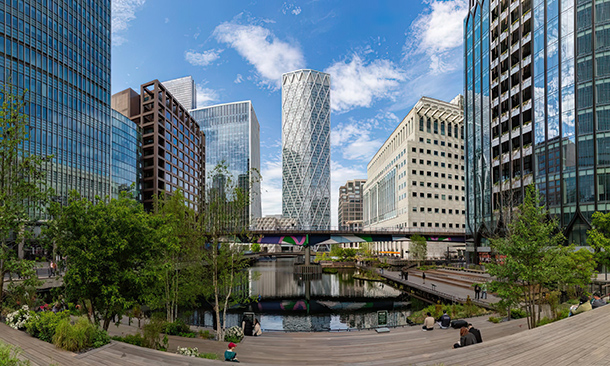
The Woodland Trust, Horticultural Trades Association (HTA) and Royal Horticultural Society (RHS) are renewing their call to ministers, amid repeated extreme heat they fear could become the summer norm.
The UK has suffered record-breaking heat this year, with London recording an all-time May high of 35.1°C before further national peaks in June.
“More trees and green infrastructure and a stronger domestic tree production sector to supply the planting the country urgently needs,” is the solution.
Lingwood, Norfolk recorded 37.7°C on 26 June, while the Mayor of London’s Heat Ready London plan warned rising temperatures were already putting homes, schools, hospitals, care services and infrastructure under pressure.
Awaiting the government’s England Trees Action Plan, the organisations, which make up the Strong Roots trees alliance, urged inclusion of two “vital” recommendations from its own report in a 17 June letter to Minister for Nature Mary Creagh MP, sent ahead of the recent heatwave.
• Feasibility study into what proportion of imported tree material could be produced domestically
• Use the study to develop a dedicated action plan for increasing productive and ornamental tree production in England.
The Strong Roots report, published last October, suggests the government’s Net Zero Strategy to plant 40,000 ha of trees annually by 2030, is likely to be hampered by lack of a designated action plan and shortage of skilled workers.
Stressing trees’ “essential role in sustaining biodiversity, mitigating climate change and enhancing wellbeing”, it outlined how to boost availability of home-grown trees across Britain.
A Manchester study revealed that concrete surfaces reached 40°C in full sun, compared to 23°C for grass.
Adding tree shade further cooled concrete 12°C and grass 9°C.
The annual value of urban cooling by UK vegetation was an estimated £430 m in 2020 (£547 m pa in 2025).
Green infrastructure was not a nice-to-have but essential, said Fran Barnes, HTA chief executive.
“Plants, gardens and trees can make a measurable difference to how hot our streets, homes and communities feel. In dense urban areas, where hard surfaces trap and retain heat, trees and green spaces provide shade, cool the air and reduce the heat absorbed by buildings, roads and pavements.
If we wanted safer, healthier, more liveable places in extreme heat, we needed to plan, grow and plant the trees and green spaces to protect communities, government must give businesses the confidence to invest in the domestic production needed to deliver it, she stated.
Recent extreme temperatures showed how poorly prepared the country was for rapidly changing climate, said Andy Egan, the Woodland Trust’s head of conservation policy, with “millions living in tree deserts”.
Government should prioritise planting high-quality home-grown trees in these areas, “protecting communities and restoring nature.”
“Trees are one of the most effective natural tools for cooling urban environments, said Prof Alistair Griffiths, RHS director of science and collections, “improving air quality and supporting biodiversity . . . “but we must urgently grow, establish and provide long-term care for more resilient, home-produced ones.”