
Of the many thousands of species of insect in the UK, only a few are considered a pest when found in human environments, writes John Horsley, training and development officer at the British Pest Control Association (BPCA).

For landscaping and grounds maintenance professionals, there’s a delicate balance to consider between protecting the natural ecosystems that bring life and colour to site and preventing a potential risk to human health and safety.
Spring is an optimal time to take a few simple steps that will help avoid insect issues later in the summer.
Wasps
Queen wasps will be starting to build their nests ready to rear the first workers of the year.
Tip: In spring, the nests are typically very small, around the size of a golf ball and can be easily removed.
As spring moves into summer, workers take over foraging and the queen will produce 200 to 300 eggs daily, building to a nest of between 5,000 and 8,000 wasps by late summer.
If one wasp feels the nest is being threatened, it may emit a pheromone to alert others and can trigger a defensive stinging frenzy – and that’s the last thing you want, when you might be up against several thousand.
Wasps aren’t all bad though. They are accidental pollinators and nature’s pest controllers.
Tip: Wasps eat aphids and other plant pests, so if you discover a wasp nest in a low traffic area, it may be best to leave them in.
Nests are often found in sheltered spots however, such as tree hollows, bushes, or under eaves, in sheds or garages. This is by no means an exhaustive list though; BPCA members report finding them in all kinds of places, from toilet cisterns to brass instruments.
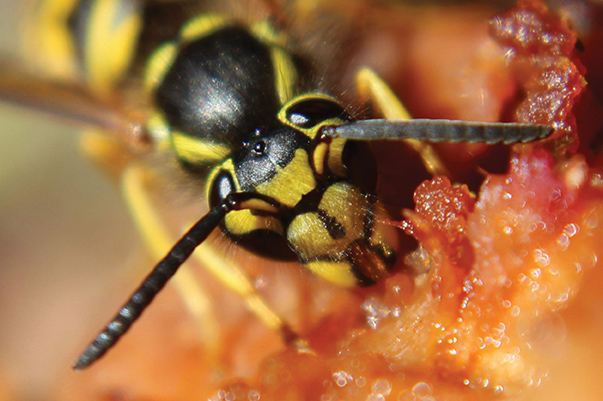
Towards the end of August, worker wasps will start to leave the nest and feast on fermented fruit. We refer to this as ‘drunk wasps’ and they can become aggressive, increasing risk of stings.
Wasp stings can trigger anaphylaxis, a potentially fatal allergic reaction. BPCA always recommends seeking help from a member, who commands the knowledge, skills and experience to tackle a nest safely.
European hornets
Far larger than wasps, and formidable-looking, European hornets are generally less aggressive, although they will sting if provoked or in defence of a nest.
Hornet nests are rarely found within building walls or ceilings and are much more likely to be constructed in a tree hollow or hanging from a branch.
Our native hornets are 3 to 4 cm long and are bigger than the yellow-legged (Asian) hornet, an invasive non-native species with an orange head and a body almost entirely dark.
Landscapers who suspect they have seen a yellow-legged hornet, should report the sighting and any evidence to the Non-Native Species Secretariat.
Tip: You can download the Asian hornet watch app on Google Play or the App Store.
Mosquitoes
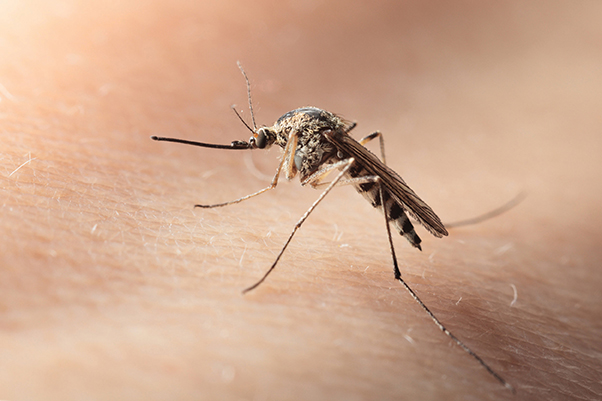
Of the UK native mosquito species, only a handful are linked to nuisance biting reports but species in other countries have been implicated in the spread of diseases including West Nile Virus.
Generally, the only risk from mosquitoes in the UK is an uncomfortable, itchy and swollen bite but occasionally people can suffer an allergic reaction that may need medical attention.
Tip: Mosquitoes lay their eggs in still water including
ponds, ditches and marshes, as well as water butts, watering cans and buckets, so spring is a good time to empty them and give them a clean to remove any overwintering eggs.
As our climate changes, some non-native species of mosquito may become established in the UK. Eggs from the Egyptian mosquito (Aedes aegypti) were detected for the first time in the UK at Heathrow Airport in September 2023, while Asian tiger mosquito (Aedes albopictus) eggs were found at a service station on the M20 in Kent in August 2024 – the first since 2019.
Ticks
Generally found lurking in long grass, woodland, moorland, parks and gardens, ticks are a parasitic arachnid that feed from a variety of animal hosts.
They will attach to a host and find an exposed area of skin to bite. If undisturbed, ticks may feed for up to seven days before letting go.
While most native ticks don’t carry infection, some do and can pass on diseases including anaplasmosis, tick-borne encephalitis virus, babesiosis and Lyme Disease.
While landscapers may have adequate PPE that will prevent ticks finding an area to latch on to, clients, visitors, walkers and dogs on site are often more exposed.
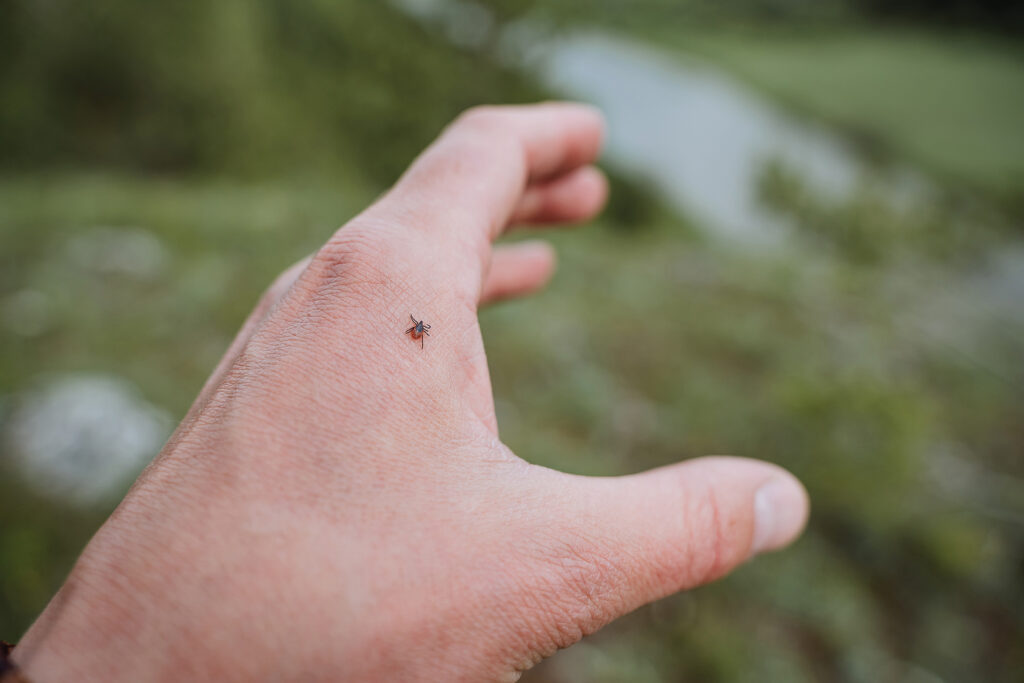
Tip: In areas where there is a known tick presence, signage raising awareness around ticks can be useful.
BPCA member businesses are endorsed by the Government via the TrustMark quality scheme as they must carry the correct insurances and are trained and qualified technicians who are assessed to the British Standard in pest management EN 16636 and follow BPCA’s Codes of Best Practice.
Source a BPCA member at bpca.org.uk/find