
Hot, dry weather can take its toll on even the healthiest lawns.
After a prolonged heatwave, it’s common for grass to lose its vibrant green colour, become dry and brittle, or even turn completely brown. While this can be alarming, the good news is that most UK lawns are far more resilient than they appear.
In many cases, your lawn isn’t dead – it’s simply dormant and this is a sign the grass is conserving energy. However, extended dry weather or inconsistent watering can weaken roots, allowing weeds and moss to take hold. Compaction and shallow watering also cause uneven patches, as moisture fails to reach the deeper roots where it’s needed most.
Follow these steps from lawn care experts, Johnsons Lawn Seed, to help your grass survive the heatwave, recover quickly and return to its best:
1. Water Deeply and Not Often
When restrictions allow, water your lawn thoroughly once or twice a week rather than little and often. Deep watering encourages roots to grow downwards, helping your grass withstand dry conditions. Early morning or evening watering reduces evaporation and ensures more moisture reaches the soil.
2. Raise Your Mower Blades
During hot weather, avoid cutting grass too short. Keeping blades around 5–7cm (2–3in) tall helps shade the soil, retain moisture, and protect roots from heat stress.
3. Feed Wisely
Avoid applying high-nitrogen fertilisers during drought, as they encourage leaf growth when roots are struggling. Instead, use a balanced or slow-release feed when rain is forecast to strengthen root systems and improve drought tolerance.
4. Aerate Compacted Areas
Dry lawns often suffer from compacted soil, which prevents water from soaking in evenly. Use a garden fork or hollow-tine aerator to relieve compaction and help moisture penetrate to the roots.
5. Overseed After Drought
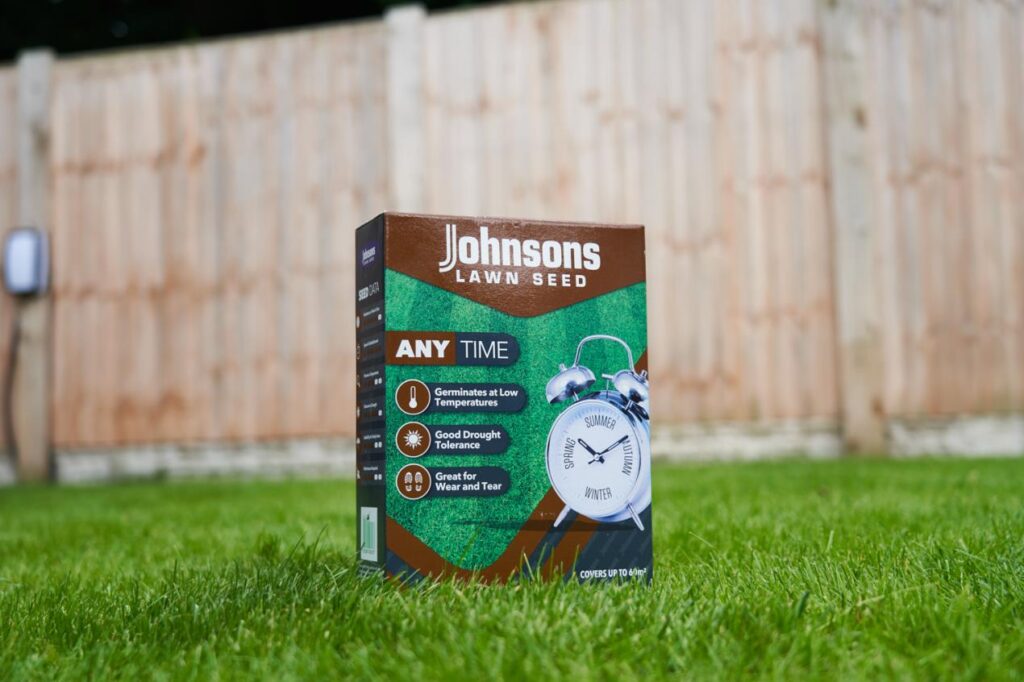
Once rain returns, rejuvenate your lawn by overseeding bare or thinning areas. Choose a resilient, drought-tolerant grass seed such as Johnsons Lawn Seed Anytime or Johnsons Shady Place, depending on your conditions. New growth will restore density and improve future drought resistance.
Drought Prevention
Healthy lawns are more resilient to dry spells. Regular aeration, feeding, and overseeding help develop deep, strong roots that can find moisture below the surface. Choosing drought-tolerant grass varieties and maintaining good soil structure can significantly reduce the impact of future heatwaves.
Top Tip: Don’t panic if your lawn turns brown during a drought — most UK grasses will recover naturally once moisture returns. Focus on gentle care rather than overwatering or heavy feeding during stress periods.
For more stories like this, visit our news section.