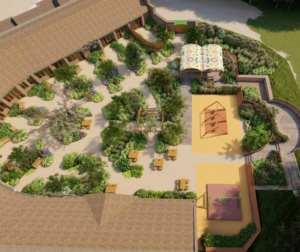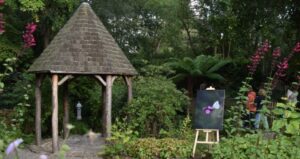

When a rare and previously believed to be extinct orchid was discovered growing on a green rooftop in the city of London, it offered a striking illustration of how roofs can become havens for biodiversity.
By bringing nature into residential, commercial and healthcare developments, green roof terraces are reshaping our approach to cityscapes. Jayden Bowie, head of business development at roof terrace experts Raaft, explains how modular terrace systems are enabling more ambitious, biodiverse rooftop designs through the integration of decking, planters and living elements.
Green roofs are typically associated with aesthetics but a well-designed roof terrace can have a significant ecological value. By providing genuine microhabitats that attract insects, pollinators, birds and even small mammas they also offer food sources, shelter and nesting opportunities.
This requires thoughtful planting, varied substrate depths and features such as deadwood or shallow water trays cements that turn a roof from a decorative feature into a fully functioning ecosystem.
Shifting perceptions
The rediscovery of a rare orchid on a London rooftop can play a crucial role in changing perceptions and help clients, designers, landscapers and building owners understand that roofs are not simply visual amenities.
This shift in thinking opens up the conversation around roof terraces in supporting biodiversity, food production, wellbeing, social interaction and climate resilience.
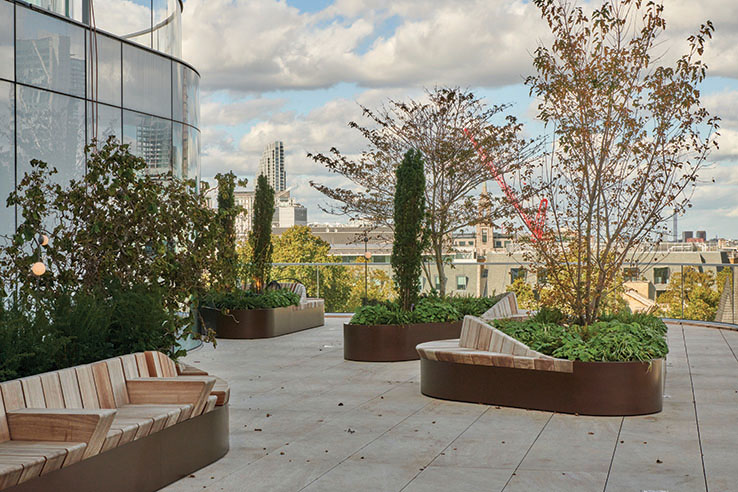
An excellent example can be found at 60 London Wall, an extensively refurbished and reconfigured BREEAM ‘outstanding’ building in the City of London. Its roof terraces are home to beehives producing honey, sold directly from the building. The project demonstrates how biodiversity-led design can thrive at height, even in the heart of the financial district.
Planting Strategy
Successful roof terrace planting depends on context. Drought-tolerant perennials, native wildflower mixes. sedum and biodiverse meadow systems are among the most effective options, particularly when combined with irrigation strategies suited to the building’s location and exposure.
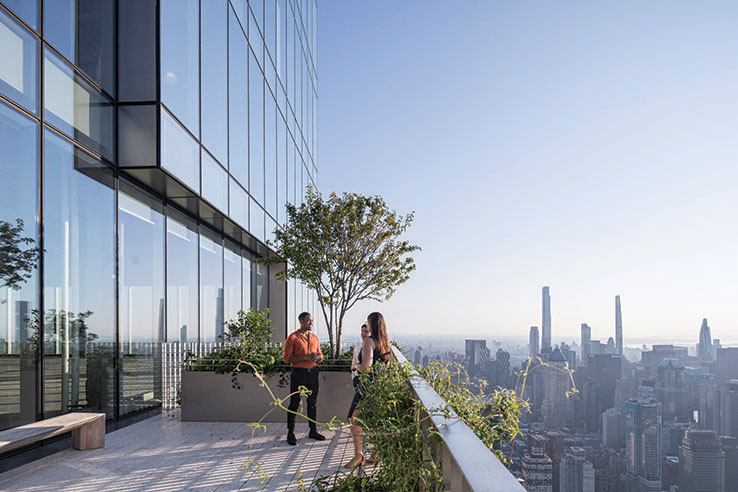
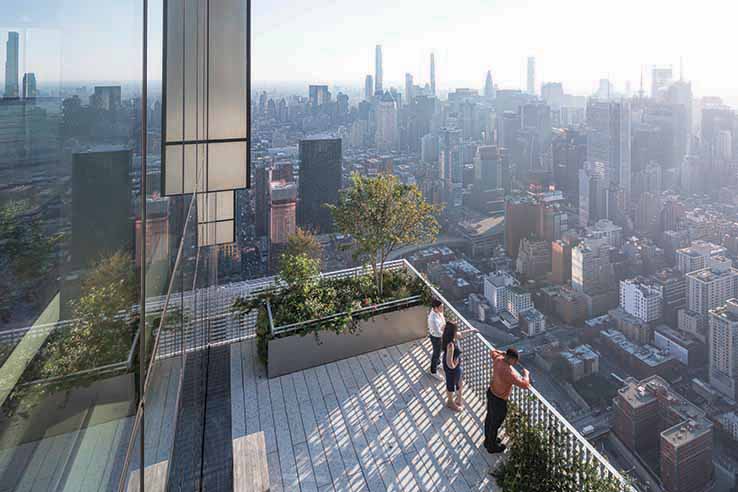
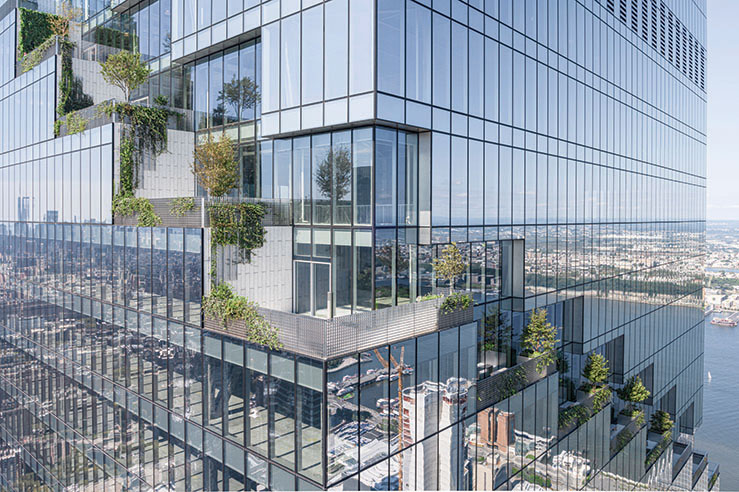
This was brought into sharp focus on The Spiral at 66 Hudson Yards in New York, a landmark project where Raaft provided aluminium joists and adjustable pedestals to connect atrium workspaces on every tower floor.
Featuring around 13,000 square feet of outdoor space planted above 300 feet, The Spiral is the city’s first attempt to grow greenery at this vertical scale. Initial plant selections were ultimately replaced with hardier, wind and drought-resistant species suited to the extreme conditions at height.
Planting varies by elevation and orientation with prairie species used on the wind-exposed south side shade tolerant on the north side and carefully selected flowering trees managed to balance resilience with uplift forces.
Plan early
Biodiversity should be integrated from the earliest conceptual stage so that structural loads, irrigation, access, and planter placement are designed holistically rather than retrofitted. Early co-ordination also avoids costly mistakes later, particularly on projects where weighe limits and waterproofing are critical.
Overcoming retrofit challenges
Retrofitting green terraces on to existing buildings presents distinct challenges. Weight limitations, restricted access, shallow build-ups, drainage constraints and long-term maintenance requirements can all limit what is achievable, especially on older or lightly loaded roof structures.
Modular terrace systems distribute weight efficiently. allow controlled drainage and provide accessible service zones, all without compromising waterproofing.
Components can also be removed or reconfigured for maintenance, extending the lifespan of both the terrace and the roof beneath.
A sense of wellbeing
In commercial and healthcare settings, access to nature is increasingly recognised as a driver of wellbeing. Green roof terraces have been shown to improve mood, reduce stress and boost productivity, making them a priority for organisations focused on employee wellbeing patient recovery and ESG-driven design.
Raaft has recently supported NHS mental healthcare projects, where safety is paramount. In these environments, surfaces and fixings must minimise risk of self-harm or injury. One effective solution has been can pound stare, a porous yet continuous, fixed surface that combines drainage performance with safety and comfort underfoot.
Modular design
Traditional roof build-ups can limit creativity, but modular terrace systems offer far greater flexibility.
Adjustable pedestals and modular components allow decking, paving, planters and green spaces to be seamlessly combined into highly customisable layouts without invasive construction.
At 60 London Wall, this flexibility enabled intricately cut porcelain tiles, curved CorTen steel planters and bespoke hardwood benches to coexist on the same terraces. The result is a series of busy, thriving communal spaces that balance architectural ambition with generous planting.
A living layer
Cities are becoming denser and the roof is one of the ast untapped frontiers for green infrastructure.
Through careful co-ordination between terrace systems. waterproofing and planting design, modular roof terraces can evolve into living layers of the urban fabric.
This supports biodiversity, enhancing wellbeing and adapting over time as buildings and their uses change.
With the right roof terrace systems in place, the urban roof can be so much more than a roof with a view.